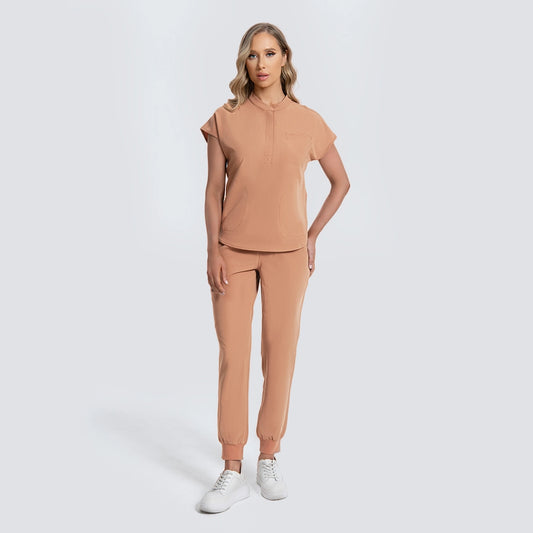



As the global healthcare industry continues to evolve, the demands of medical professionals for their workwear—especially scrubs—are also changing. Traditionally, scrubs focused primarily on basic hygiene, protection, and durability. Today, especially in medical hubs across the U.S. and Europe, "comfort, fit, and function" have become the core metrics for evaluating scrubs. This shift reflects not only technological advancements in textile design but also a deeper understanding of healthcare workers' well-being, efficiency, and professional needs.
This article provides an in-depth analysis of the transformation of scrubs in the modern era, examining comfort, ergonomic fit, and functional design, and explores how these trends improve the daily work experience of healthcare professionals while delivering tangible benefits to healthcare institutions.
1. Why "Comfort, Fit & Function" Is the Focus of Modern Scrubs
Healthcare professionals are the backbone of hospitals, clinics, and health centers. Their daily work involves long hours on their feet, frequent movement, and continuous attention to patients. Traditional scrubs, while meeting basic hygiene requirements, often fail to address the growing demands of high-intensity work. The following factors have driven the evolution of modern scrubs:
- Long working hours: Many doctors, nurses, and clinical staff work more than 10 hours a day, frequently walking, bending, and responding to emergencies. Loose-fitting, non-breathable scrubs can increase fatigue and discomfort.
- High-intensity physical activity: In operating rooms and emergency departments, unrestricted movement directly affects task efficiency and precision.
- Diverse work environments: Hospitals are complex, from laboratories to patient rooms, hallways to operating theaters, each with different uniform requirements.
- Focus on work experience: Healthcare workers increasingly value comfortable, professional apparel, and institutions are paying attention to staff well-being and productivity.
Thus, "comfort, fit, and function" is not just a design trend—it reflects the industry's commitment to the health, efficiency, and experience of healthcare professionals.

2. Comfort: The Core of Wearability
Comfort represents the degree to which apparel is friendly to the body, encompassing fabric properties, breathability, softness, and weight. In modern scrubs, comfort is the most immediate and noticeable indicator.
2.1 Fabric Selection: Lightweight, Breathable, and Soft
Modern healthcare apparel uses advanced fibers and weaving technologies far beyond traditional cotton or polyester blends:
- High-stretch fabrics: Incorporating spandex or elastane increases flexibility, allowing healthcare workers to bend, squat, and reach freely.
- Cooling fiber technologies: Keeps the wearer cool in warm environments, reducing fatigue.
- Enhanced breathability fabrics: Specially engineered weaves increase airflow and minimize sweat buildup.
2.2 Detail Design for Skin-Friendly Wear
Fabric alone is not enough—thoughtful design details further enhance comfort:
- Neckline without tight constraints: Reduces pressure around the neck.
- Flat seams and soft edges: Minimize chafing and irritation.
- Moisture-wicking panels: Facilitate sweat evaporation for better comfort.
2.3 Practical Significance of Comfort
Uncomfortable scrubs can lead to:
- Muscle fatigue and restricted movement
- Distraction and reduced focus
- Lower overall efficiency
- Potential occupational health issues
Improving comfort is therefore not just aesthetic—it is essential for reducing fatigue and enhancing performance.
3. Fit: Deep Integration with Ergonomics
Modern scrubs are no longer one-size-fits-all loose garments. Ergonomic design considers human anatomy and motion patterns.
3.1 Importance of Ergonomic Fit
Ergonomic tailoring aligns with natural body movements:
- Structured shoulder design: Supports arm movement without restriction.
- Optimized pants cut: Added flexibility in knees, hips, and thighs ensures freedom when walking quickly or bending.
- Waist and hip support: Enhances stability and fit.
3.2 Gender and Body Diversity Design
Historically, many scrubs ignored differences in gender and body types. Modern designs address diversity:
- Gender-specific tailoring: Adjustments for waistlines, shoulder widths, and hip measurements.
- Expanded sizing: Covers XS to XXL+
- Adjustable features: Elastic waistbands or ties allow personalization.
3.3 Smart Fit Enhancements
Advanced technologies like 3D scanning and body motion modeling are being used to optimize scrubs:
- Dynamic compression zones reduce motion resistance
- Extra movement space in bending areas
Such design improvements enhance both aesthetics and practical usability.
4. Function: From Utility Pockets to Smart Features
Functionality distinguishes modern scrubs from traditional uniforms. Today's scrubs integrate multiple practical features, transforming garments into effective work tools.

4.1 Utility Pockets: Practicality First
Healthcare workers carry pens, scissors, notebooks, mobile devices, and ID cards. Modern scrubs include:
- Multi-pocket design: Organize items for quick access
- Hidden zippers or secure pockets: Prevent items from falling
- Specialized compartments: Fixed slots for scissors, pens, and small tools
4.2 Hygiene and Protective Features
Modern scrubs also focus on infection prevention:
- Easy-to-clean fabrics: Resistant to high-temperature washing, wrinkle-free, and dust-repellent
- Antimicrobial treatments: Reduce bacterial growth and promote occupational health
- Quick-dry technology: Speeds up drying for more frequent rotations
-

4.3 Integration of Smart Technology
Technology further enhances scrub functionality:
- RFID tags: Improve uniform tracking and reduce loss
- Embedded sensor prototypes: Monitor wearer's temperature, heart rate, or movement for enhanced safety
These smart features not only improve efficiency but also indicate a future where scrubs may serve as wearable healthcare devices.
5. Industry Value of Comfort, Fit, and Function
Scrubs that combine comfort, ergonomic fit, and functionality benefit not only individual healthcare workers but also the operational efficiency of healthcare institutions.
5.1 Improved Work Efficiency
When scrubs reduce discomfort, enhance mobility, and optimize storage:
- Staff can perform tasks faster
- Error rates decrease
- Patient satisfaction improves
5.2 Reduced Occupational Health Risks
Poorly designed uniforms can lead to:
- Musculoskeletal strain
- Skin irritation
- Accumulated physical stress
High-quality scrubs mitigate these risks.
5.3 Cost Savings in Maintenance and Inventory
Durable, easy-to-maintain scrubs:
- Reduce frequent replacements
- Improve inventory usage
- Lower procurement costs
6. Conclusion: Modern Scrubs Are Professional Tools, Not Just Uniforms
Healthcare scrubs are evolving from traditional uniforms into high-performance, ergonomically designed, and functional workwear. The integration of comfort, fit, and functionality drives this transformation.
For independent e-commerce sellers, this represents a valuable content opportunity—communicating the science, trends, and occupational value behind the products. Healthcare professionals are more likely to purchase scrubs not just because they look good, but because they genuinely improve the work experience.

7. FAQ
Q1: What is the most noticeable difference between modern scrubs and traditional styles?
A1: Modern scrubs are systematically upgraded in comfort, fit, and function to better meet high-intensity work demands.
Q2: Are ergonomically designed scrubs worth the higher cost?
A2: Yes. Wearing ergonomically designed scrubs reduces fatigue and improves performance, offering significant value to healthcare workers.
Q3: How can one evaluate if a scrub is comfortable?
A3: Consider fabric breathability, stretch, weight, cut freedom, and pocket design comprehensively.