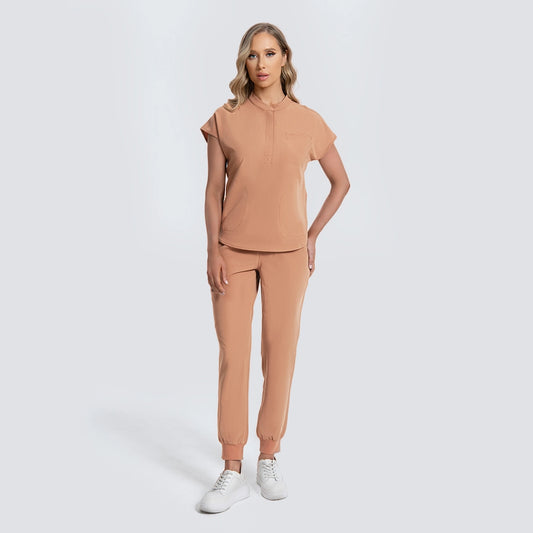



Getting dressed for a healthcare shift should feel straightforward. Yet a drawer full of scrub tops and trousers does not always make choosing an outfit easier. One top feels restrictive, another never matches your trousers, and your favourite set is still waiting to be washed.
A practical work wardrobe starts with a few dependable pieces that fit your body, suit your workplace and work together. Whether you are starting a new role or replacing worn uniforms, here is how to choose scrubs and medical uniforms that make everyday dressing simpler.
Start With Your Workplace Requirements
Before choosing colours or styles, check what your employer allows. Some workplaces assign uniform colours by department, while others specify particular tops, trouser styles or approved layers.
Confirm whether uniforms are provided and whether they must be laundered through the workplace. Buying several sets before checking these details can leave you with clothes you cannot use.
Make a short list of your requirements: approved colours, permitted fits, footwear rules and layering options. This gives you a clear starting point and helps keep your purchases focused.
Build Around One Reliable Scrub Set

Start with a top and trousers that feel comfortable throughout your normal range of movement. A matching set makes getting dressed easy, but you do not necessarily need the same size in both pieces.
Check the top across your shoulders and upper back. Reach forward and raise your arms to see whether the fabric pulls or the hem lifts too far. Then sit and squat in the trousers. The waistband should stay secure without pressing into your stomach.
If possible, wear and wash one set before buying more. A garment can feel different after several hours of use, and its fit after laundering matters just as much as its appearance in the fitting room.
Choose Fabric for Your Working Environment
Fabric composition is useful information, but it does not tell the whole story. Weight, weave, stretch and finishing also affect how a uniform feels.
Cotton-rich fabrics may appeal if you enjoy a softer, more familiar texture. Polyester blends often offer convenient drying and wrinkle resistance, while elastane can add flexibility. However, two fabrics with similar fibre percentages can perform differently.
If your workplace feels warm, look for a lightweight fabric that still provides adequate coverage. In cooler settings, choose a comfortable base uniform that leaves room for an approved layer.
Check the material in good light and stretch it gently. It should remain sufficiently opaque and return towards its original shape when released.
Make Every Pocket Earn Its Place

A useful pocket arrangement begins with the items you actually carry. Think about your phone, pens, access card and any approved work tools before deciding how many pockets you need.
A chest pocket can hold a pen or small notepad. Trouser pockets may be more convenient for a phone, while a zipped compartment can help secure personal belongings.
Try sitting down with your usual items in place. A pocket that looks practical while standing may press against your thigh or become awkward to reach when seated.
Keep heavier items distributed sensibly. Overfilled pockets can pull at the waistband, distort the top and make an otherwise comfortable uniform feel cumbersome.
Pick Colours That Work Together
Where your dress code allows choice, a small colour palette makes a work wardrobe easier to manage. Start with one main colour, then add another shade that coordinates with your existing pieces.
Navy and charcoal offer understated options, while teal or burgundy can bring variety. Choose colours you enjoy wearing and can replace easily when individual garments wear out.
For an exact matching set, buy from the same collection and colour reference. Two items labelled “navy” may differ in tone or surface finish.
If you mix separates, make the combination look intentional. Clearly contrasting colours often look more coordinated than two almost-matching shades.
Add a Layer With a Clear Purpose
An extra layer is useful only if it works with your uniform and workplace rules. A permitted scrub jacket or undershirt may help you adjust to changing temperatures without replacing your whole outfit.
Try the layer over your usual scrub top. Your shoulders should still move freely, and the sleeves should not bunch or interfere with your work.
Consider where you will store the layer when you take it off. A lightweight piece that fits neatly into your bag may be more practical than a bulky jacket.
Keep the colour simple so it works with several sets. This helps one well-chosen item serve multiple outfits.
Plan Your Rotation Around Laundry

There is no single correct number of scrub sets. The right amount depends on your shift pattern, laundry access and workplace requirements.
For example, if you work three consecutive shifts and wash uniforms afterwards, three clean sets plus a spare may be a practical starting point. Someone with a different schedule may need a different arrangement.
Keep a spare available where your workplace permits it. This can make an unexpected clothing change easier to manage.
Follow the care label and your employer’s laundering instructions. Before purchasing, check that the recommended care routine fits your needs. A uniform that demands inconvenient handling may become the set you rarely choose.
Check the Details Before You Buy More
Once you have found a comfortable fit, inspect the smaller details. Pocket openings, drawcords, waist elastic and seams all receive repeated use.
Look for even stitching, neatly finished edges and pockets that sit flat. Run your hand along the inside seams to check for rough areas. Adjust the drawcord and test any zips.
Notice how the trousers behave when you walk. Hems should clear the floor, and cuffs should feel comfortable around your ankles. Straight-leg, tapered and jogger styles can all work well when their proportions suit you and your workplace.
A thoughtful purchase is one you can imagine reaching for repeatedly, not simply one that looks attractive on a hanger.
Refresh Your Wardrobe Gradually
You do not need to replace every item at once. Start with whichever piece causes the most inconvenience: trousers that slip, a restrictive top or a jacket that feels too bulky.
Keep track of the sizes, lengths and collections that work for you. This makes future purchases easier and reduces guesswork.
When a garment becomes uncomfortable, develops damaged seams or no longer meets workplace standards, replace it with something that fits your existing wardrobe.
The most useful collection of scrubs and medical uniforms is one you can rely on. Comfortable fits, practical storage, compatible colours and a manageable laundry rotation give each piece a clear purpose—and make preparing for your next shift a little easier.