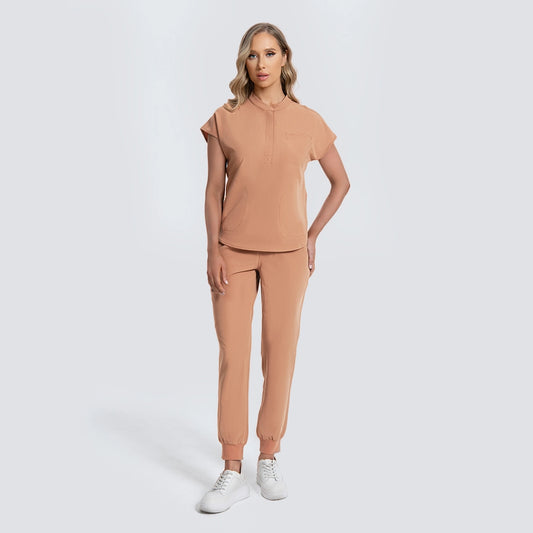



A busy nursing shift often means hours of walking between rooms, standing beside patients’ beds, and completing nursing documentation. If your legs feel uncomfortable before your shift ends, it may be worth taking a closer look at your socks as well as your work shoes.
The best compression socks for nurses combine an appropriate pressure level, accurate sizing, and comfortable construction. This guide explains what to compare before buying, helping you choose a pair that suits your legs, work shoes, and daily routine.
Why Do Nurses Consider Compression Socks?
Long periods of walking or standing lead some nurses to consider compression socks as part of their workwear. Unlike regular socks, compression socks apply pressure to the legs, so choosing a pair requires attention to the pressure rating, fit, and your individual health needs.
When shopping for compression socks for work, look for a clearly stated pressure range, a detailed size chart, and straightforward care instructions. An attractive pattern may catch your eye, but these practical details are more useful when deciding whether a pair belongs in your regular rotation.
Start With the Compression Rating
Compression is usually measured in millimeters of mercury, written as mmHg. Common product ratings include 8–15, 15–20, and 20–30 mmHg. Check the actual numbers, as terms such as “mild” and “moderate” may vary between brands.
A longer shift does not automatically call for stronger compression. If you are buying socks to address swelling or a diagnosed condition, consult a healthcare professional first to determine whether compression is appropriate and which pressure level to choose.
When comparing products, look for the actual mmHg range. Marketing phrases such as “maximum support” or “nurse recommended” do not tell you how much pressure a sock provides.
Measure Before You Order
Shoe size alone may not be enough to select compression socks accurately. Depending on the product, the size chart may also use ankle circumference, calf circumference, and lower-leg length.
Follow the brand’s measuring instructions. Keep the measuring tape level and comfortably against your skin, then compare your measurements with the chart for that specific product. A medium from one brand may fit differently from a medium elsewhere.
If your measurements fall across two sizes, contact the seller or a qualified fitter for guidance. Do not deliberately choose a smaller size to create more pressure, as this can result in an unsuitable fit.
For larger calves, look for dedicated wide-calf styles with clearly stated circumference ranges. Simply increasing the foot size may leave extra fabric around your toes without resolving tightness around the calf.
Focus on Features That Affect Comfort at Work
Smooth Toe Seams and Enough Toe Room
Look for smooth toe seams and enough room for your toes inside your usual work shoes. As you walk, notice whether the fabric bunches up or presses against your toenails.
Try the socks with the shoes you actually wear at work. A pair that feels comfortable on its own may be too bulky inside a close-fitting shoe.
Fabric and Cushioning
Compare fabric composition, thickness, and care requirements. Nylon and elastane blends are common, while some products include wool or other fibers. Check the specifications rather than relying only on descriptions such as “cooling” or “premium.”
Lightly cushioned styles may suit shoes with more internal space, while thinner socks may work better with closer-fitting footwear. Also consider the temperature of your workplace and whether your feet tend to feel warm.
Length and Cuff Design
For knee-high styles, check the length measurements as well as the calf size. The cuff should sit below the knee without excess fabric gathering behind it.
Wide and narrow cuffs can feel different, so review product close-ups and customer feedback about sizing. If the socks are too long, do not fold the cuffs over to shorten them.
Which Features Should You Prioritize?
| Your shopping needs | Features to compare |
|---|---|
| Buying your first pair | Clear pressure rating, detailed size chart, and clear return policy |
| Larger calves | Dedicated wide-calf sizes and published circumference ranges |
| Warm working conditions | Fabric thickness, fiber composition, and breathability information |
| Close-fitting work shoes | Thin construction, smooth seams, and minimal bulky cushioning |
| Frequent washing | Clear care instructions and reinforced heels and toes |
These are shopping priorities rather than a brand ranking. Your final choice should reflect your measurements and the compression level recommended by a healthcare professional.
Try Them Before Wearing Them for a Full Shift
When wearing a new pair for the first time, start with a shorter trial. Check that the heels are correctly positioned and the fabric lies smoothly, then assess how the socks feel while sitting, standing, and walking. Do not fold the cuffs or allow fabric to bunch up and create concentrated pressure.
Remove the socks and consult a healthcare professional if you experience pain, numbness, tingling, skin discoloration, or worsening swelling. If you have peripheral artery disease, reduced sensation in your legs, or significant unexplained swelling, seek professional guidance before use.
Build a Practical Sock Rotation
Start with one pair before buying a multipack. Once you have confirmed that the size and fit work for you, decide how many pairs you need based on your work schedule and laundry routine.
Follow the product’s washing and drying instructions. Check regularly for holes, loose cuffs, thinning fabric, or a noticeable change in fit. Replace worn socks according to the manufacturer’s guidance.
The best compression socks for nurses offer an appropriate pressure rating, sizing that matches your legs, and a comfortable fit inside your work shoes. Confirm those essentials first, then choose the colors and patterns you enjoy wearing.