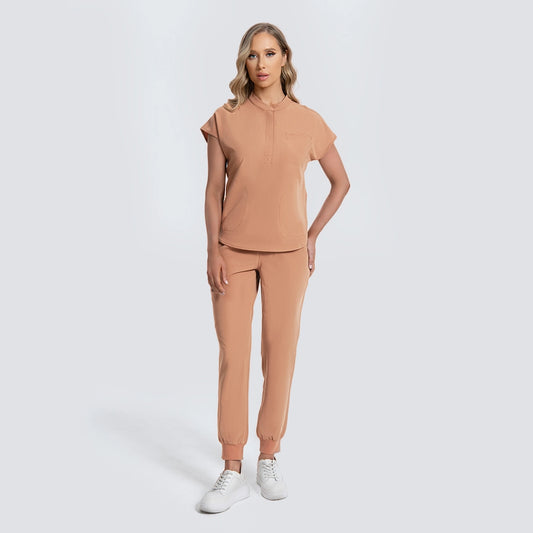



A long healthcare shift can involve hours of walking, standing, bending, lifting and moving between different environments. A uniform that feels comfortable at the beginning of the day may become restrictive several hours later. Shoes that seemed supportive during a quick fitting may start to feel heavy, and small inconveniences—such as an unstable waistband or poorly positioned pocket—can become increasingly distracting.
Staying comfortable throughout a long shift is not usually the result of one product or habit. It comes from making several practical choices that work together: wearing suitable scrubs, selecting supportive footwear, managing temperature, eating and drinking regularly when possible, and using short breaks effectively.
Here are some of the ways healthcare workers can improve comfort during demanding shifts.
Start With Scrubs That Move With You
Comfort begins with clothing that supports the movements required by the job.
Scrubs should provide enough room through the shoulders, back, hips and thighs for reaching, bending and squatting. However, excessively loose fabric can also cause problems. It may catch on equipment, bunch behind the knees or shift when pockets are loaded.

The goal is a balanced fit that follows the body without restricting it. Four-way-stretch fabric can be particularly helpful because it moves both horizontally and vertically. Gusseted crotches, side vents and articulated seams can provide additional mobility without making the entire uniform oversized.
Fit should always be tested in motion. Raise your arms, sit down, bend forward and take a long step. The top should not ride up excessively, the pants should remain secure and the fabric should not pull sharply across high-movement areas.
Choose Breathable, Easy-Care Fabric
Hospital temperatures can vary throughout a shift. A warm patient room, busy corridor and cool nurses’ station may all require different levels of comfort.
Lightweight, breathable scrub fabric can help release heat, especially in active departments. However, very thin material may lack coverage or structure. A moderately lightweight fabric with a smooth, matte surface often provides a useful balance between breathability and a professional appearance.
Moisture-wicking and quick-drying properties may also help the uniform feel fresher during active work. Fabric with good recovery should return to its original shape after stretching rather than remaining loose around the elbows, knees or seat.
Easy-care material that resists excessive wrinkling is another advantage. Scrubs that maintain their shape after repeated washing are more likely to remain comfortable and presentable throughout their useful life.
Pay Attention to the Waistband
A waistband that rolls, slides or feels too tight can become uncomfortable surprisingly quickly.
Many healthcare workers prefer scrub pants that combine a wide elastic waistband with an adjustable drawcord. The elastic distributes pressure more evenly, while the drawcord helps keep the pants secure when pockets contain a phone, keys or other supplies.
The waistband should stay in place when walking quickly, sitting and bending. It should not require constant tightening or adjustment. A flat, soft interior finish can also reduce rubbing during extended wear.
When trying scrub pants, test them with the items you usually carry. A waistband may feel secure when the pockets are empty but behave differently after weight is added.
Wear Shoes Designed for Long Hours
Footwear affects more than the feet. Shoes that feel unstable, heavy or poorly fitted can make standing and walking more tiring.
Work shoes should fit securely without squeezing the toes. There should be enough space for natural movement, but the heel should not slide excessively. Cushioning can improve comfort, although an extremely soft shoe is not automatically more supportive.

Slip resistance, breathability and ease of cleaning may also be important, depending on the workplace. Some healthcare workers prefer lightweight lace-up shoes, while others choose professional clogs or slip-on styles.
Socks matter too. Breathable socks that fit smoothly can help reduce bunching and friction. If workplace policies allow it, rotating between two pairs of work shoes may also give each pair time to dry and recover between shifts.
Shoes gradually lose their structure and cushioning. A pair that was once comfortable may need replacing when the sole becomes uneven, the upper no longer holds the foot securely or discomfort appears more frequently.
Use Layers to Manage Changing Temperatures
Healthcare environments can move from uncomfortably warm to surprisingly cold within minutes. Lightweight layers make it easier to adapt.
A fitted underscrub can add warmth without creating excessive bulk. A scrub jacket or simple warm-up layer can be useful at a cool workstation or during a night shift. The layer should still allow easy arm movement and should follow workplace hygiene and dress requirements.
Choose layers that are easy to remove and store. Heavy sweaters or oversized jackets may restrict movement and can be inconvenient in active clinical areas.
Layering is not only for cold conditions. In a warm environment, a breathable base layer may help manage moisture and prevent the outer scrub top from feeling damp.
Keep Pockets Organized
Pockets are essential for many healthcare roles, but carrying too much weight can affect comfort.
A heavily loaded chest pocket may pull the scrub top forward. An overfilled thigh pocket can swing while walking or repeatedly strike the knee. Uneven weight between the left and right sides may also make the uniform feel unbalanced.
Carry only the items needed for the current role or task. Use internal compartments to separate pens, phones and smaller objects, and distribute heavier items between different pockets when possible.
Pocket placement is often more important than pocket count. Flat, reinforced pockets located away from major movement areas tend to be more comfortable than oversized pockets placed directly over the knee or hip crease.
Periodically removing unused wrappers, notes and extra supplies can make a noticeable difference by the end of a shift.
Drink Regularly When Work Allows
Busy healthcare workers may delay drinking because it is difficult to step away. However, waiting until a break to drink a large amount at once may feel less comfortable than drinking smaller amounts regularly when workplace conditions allow.
A reusable bottle can make water easier to access during permitted breaks. Choosing an easy-to-clean, leak-resistant bottle helps prevent spills around personal items.
Individual needs vary according to temperature, activity level and other factors. Workers who have medical conditions or specific fluid requirements should follow advice from an appropriate healthcare professional.
The goal is to develop a realistic routine that fits the work environment rather than relying on a perfect schedule that is difficult to maintain.

Plan Practical Meals and Snacks
Long shifts can make regular meals difficult, so preparation can help.
Meals that are easy to carry, store and eat during a limited break are often the most useful. A simple combination of protein, carbohydrates, fruit or vegetables can provide a more balanced option than relying only on sweets or highly processed snacks.
Portable foods such as fruit, yogurt, sandwiches, nuts or prepared meal containers can be convenient, depending on dietary needs and workplace storage facilities.
Large, heavy meals may leave some people feeling uncomfortable during active work. Smaller meals or planned snacks may be easier to manage, particularly during overnight shifts.
Food choices are personal, and individual medical or dietary needs should take priority. The practical objective is to avoid reaching the middle of a demanding shift without an accessible option.
Make Short Breaks Count
A brief break may not be long enough for complete recovery, but it can still be useful.
When possible, sit down, change position and allow the feet a short period without continuous standing. Gentle ankle movements, shoulder rolls or a brief walk away from a fixed workstation may help reduce the discomfort associated with remaining in one position.
The most useful break depends on the work already performed. Someone who has been walking continuously may benefit from sitting. Someone who has been seated while documenting may prefer to stand and move.
Breaks are also an opportunity to adjust clothing before a small issue becomes a larger distraction. Retie a loose drawcord, reorganize heavy pockets or add and remove a layer as needed.
Always follow workplace break policies and avoid movements that cause pain or feel unsafe.
Adjust Comfort Strategies for Night Shifts
Night shifts create a different set of challenges. Temperatures may feel cooler, meal schedules can become less predictable and quiet periods may alternate with sudden activity.

A lightweight scrub jacket can help manage cooler conditions without restricting movement. Keeping meals and drinks easy to access may also reduce dependence on whatever happens to be available overnight.
Comfortable, well-fitted scrubs become especially important when alertness is already being tested by an unusual schedule. Waistbands that need constant adjustment, stiff fabric and unstable shoes create unnecessary distractions.
Lighting, rest schedules and caffeine use can also affect how workers feel during the night. Because individual circumstances vary, healthcare workers should follow their organization’s guidance and seek professional advice when sleep or fatigue becomes a persistent concern.
Create a Simple Post-Shift Routine
Comfort does not end when the shift finishes. A consistent transition after work can make it easier to prepare for the next day.
Change out of work clothes according to workplace and personal hygiene practices. Allow shoes to air out, empty scrub pockets and check whether anything needs washing or replacing.
A simple meal, adequate rest and a calm routine may be more sustainable than trying to complete too many tasks after an exhausting day. Preparing clean scrubs, footwear and necessary items in advance can also reduce pressure before the next shift.
Pay attention to recurring discomfort. Persistent pain, numbness, swelling or other concerning symptoms should not be treated only as a clothing or footwear problem. Appropriate medical guidance may be needed.
Small Choices Add Up Over a Long Shift
There is no single secret to staying comfortable for an entire healthcare shift. Comfort comes from a collection of practical decisions made before, during and after work.
Well-fitting stretch scrubs reduce unnecessary restriction. Supportive footwear makes hours of standing and walking easier to manage. Lightweight layers help with changing temperatures, while organized pockets prevent the uniform from becoming unnecessarily heavy.
Regular opportunities to drink, eat, change position and briefly reset can also make a meaningful difference. The best approach is realistic, adaptable and appropriate for the individual workplace.
When clothing and daily habits support the demands of the job, healthcare workers can spend less time adjusting uncomfortable equipment and more time concentrating on their responsibilities.