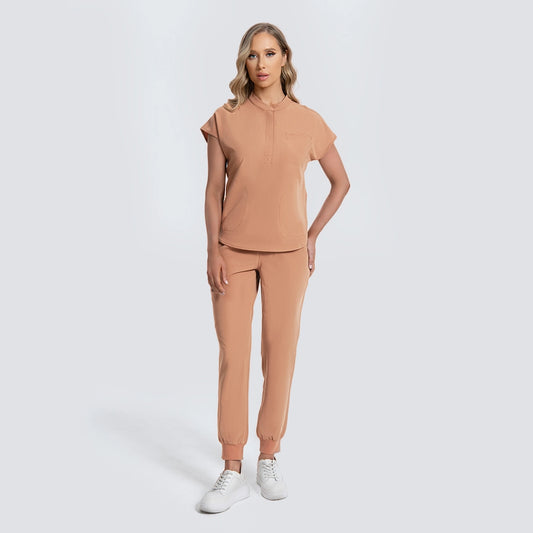



Walk into almost any hospital or clinic and one of the first things you notice is the nursing team. Their uniforms make them easy to identify, but recognition is only one part of the story. A nurses uniform must support constant movement, withstand frequent washing, offer practical storage, and communicate calm professionalism to patients and families.
The best uniform is rarely the one that attracts the most attention. It is the one that allows a nurse to move, bend, reach, sit, and work without distraction. It feels comfortable throughout a long shift, remains presentable under pressure, and supports the routines that keep clinical environments organized and safe.
Modern nurses uniforms have come a long way from the starched white dresses and caps of the past. Today, healthcare professionals can choose from tailored tunics, scrub tops, flexible trousers, maternity styles, and inclusive fits in many different colors. Behind this variety is an important principle: professional clothing should adapt to the realities of nursing rather than forcing nurses to adapt to their clothing.
From White Dresses to Modern Scrubs
Early nursing uniforms were influenced by religious garments and domestic-service clothing. Long dresses, aprons, high collars, and caps created a recognizable silhouette. White fabric became closely associated with cleanliness, discipline, and medical care. As formal nursing education developed, caps, stripes, and other details were sometimes used to represent particular schools, roles, or levels of seniority.
Although these uniforms created a strong visual identity, they were not suitable for every movement required in modern clinical work. Nurses need to walk quickly, assist patients, move equipment, bend over beds, and perform precise tasks in limited spaces. Long skirts, rigid collars, and decorative caps could restrict movement and create additional cleaning concerns.
During the twentieth century, nursing clothing gradually became simpler and more functional. Hemlines shortened, trousers became common, and traditional caps disappeared from most everyday settings. Two-piece uniforms and scrubs shifted the focus from ceremony to mobility, hygiene, and efficiency.
Today, nurses uniforms generally fall into two broad categories. Tailored tunics or uniform sets provide a structured appearance and may be preferred in outpatient clinics, reception areas, dental practices, care homes, and private healthcare environments. Scrubs usually combine a pull-on top with elasticated or drawstring trousers. Their uncomplicated construction and freedom of movement make them popular in wards, emergency departments, surgical areas, and many other clinical settings.
Neither option is automatically better. The right choice depends on the role, workplace policy, infection-control requirements, and physical demands of the shift.
Why Uniforms Shape a Patient’s First Impression
Patients often enter healthcare environments feeling anxious, uncomfortable, or unsure of what will happen next. A clear and consistent uniform system helps them identify who can provide assistance. This reduces confusion and creates a sense of order in an unfamiliar environment.
The condition and fit of a uniform can also influence how professionalism is perceived. A clean, well-fitting set suggests preparation and attention to detail. However, professional does not have to mean distant. Softer colors and comfortable, natural-looking cuts may feel more approachable than extremely formal or rigid designs.
Different care environments may benefit from different visual choices. Pediatric teams sometimes use cheerful colors or subtle patterns to reduce anxiety among children. In care settings for older adults, strong color contrast and clearly visible identification can make staff members easier to recognize. Uniform design should therefore consider the people receiving care, not just the institution’s visual branding.
Some healthcare organizations use color-coded uniforms to distinguish nurses, doctors, technicians, assistants, and support staff. When such a system is used, it should be simple and clearly explained through signs, patient information, and visible identification badges. Color can support recognition, but it should never replace formal identity checks.
A Good Nurses Uniform Must Support Real Movement
Nursing is rarely a stationary job. Reaching for equipment, checking lines, pushing beds, assisting with transfers, and sitting to document care all place different demands on clothing. A uniform that looks perfect while standing still may become uncomfortable as soon as the wearer begins to move.
When trying on a uniform, it is useful to raise both arms, reach forward, sit down, squat, and take several long steps. The top should not ride up excessively, the neckline should remain secure, and the waistband should stay in position. Tight pulling across the shoulders, underarms, hips, or knees usually becomes more noticeable as a shift continues.
The top should be long enough to provide coverage but not so long that it interferes with sitting or accessing pockets. Side vents can create additional space around the hips. Stretch panels or carefully placed pleats may improve movement across the back. Trousers should allow a comfortable stride and should not drag on the floor, where the fabric could become contaminated or create a trip hazard.
Cuffed trousers can help keep hems away from the ground, although the cuffs should not feel restrictive around the ankles.
Pockets are among the most recognizable features of a nurses uniform. A chest pocket can hold lightweight items, while divided lower pockets help organize approved work tools. Yet more pockets do not always mean a better design. Overloaded pockets add weight, pull the garment out of shape, and may encourage unsuitable items to be carried between clinical areas.
The uniform should provide sensible storage, while workplace procedures should define what can be carried and how reusable items are cleaned.

Fabric Can Change the Experience of an Entire Shift
Fabric for nurses uniforms has to meet several competing demands. It should feel comfortable without being fragile, breathe without becoming transparent, stretch without losing its shape, and survive frequent washing without excessive fading or pilling.
No single fiber delivers every benefit, so modern uniforms often use blends of cotton, polyester, viscose, lyocell, and elastane.
Cotton feels natural and absorbs moisture well, but pure cotton may crease, shrink, or lose its shape after repeated washing. Polyester is durable, quick-drying, and resistant to wrinkles, although some people find it less comfortable in hot environments. A small amount of elastane can improve movement around the shoulders, hips, and knees.
The fiber label is only part of the decision. Fabric weight, weave, interior texture, seam quality, and performance after washing can be equally important. Two garments with similar fiber percentages may feel completely different during a long shift.
Claims such as “antimicrobial,” “fluid resistant,” and “moisture wicking” should be considered carefully. These treatments may improve a specific aspect of the garment, but they do not replace hand hygiene, environmental cleaning, personal protective equipment, or workplace infection-control procedures.
Buyers should look for information about the relevant test method, expected number of washes, and limits of the claimed performance. An ordinary nurses uniform is not the same as certified protective clothing. Where there is a risk of exposure to blood, body fluids, or infectious material, appropriate gloves, aprons, gowns, masks, or other protective equipment must still be used according to workplace policy.
Opacity also matters. Light-colored uniforms should be checked in daylight and under bright indoor lighting, including while bending and stretching. Seams, zippers, labels, and drawstring ends should not repeatedly rub against the skin. A small rough area can become a major distraction after several hours of movement.
Color and Style: Consistency Without a One-Size-Fits-All Approach
White remains strongly associated with healthcare. It appears bright and clean and makes stains easier to notice, but it also demands careful laundering and sufficiently opaque fabric. Navy communicates stability and tends to maintain a polished appearance. Light blue and teal can create a calmer visual atmosphere, while gray, burgundy, or green may support a more distinctive departmental identity.
The final choice should take workplace lighting, role recognition, stain visibility, and organizational branding into account. A fashionable color is not useful if it becomes difficult to replace six months later or appears inconsistent under different lighting conditions.
Modern uniform programs are increasingly designed around different bodies rather than a single standard shape. One coordinated collection can include straight, relaxed, fitted, maternity, petite, tall, and gender-inclusive options. Staff members can maintain a consistent team identity through color and core design while choosing the cut and size that allows them to work safely.
Religious, cultural, and personal requirements may also call for longer sleeves, compatible head coverings, or less fitted garments. Inclusive options can be offered while still meeting clinical and infection-control standards. Loose sleeves, hanging accessories, and excess fabric must not interfere with procedures or touch patients, equipment, or contaminated surfaces.
Uniformity should create clarity, not erase the needs of the person wearing the uniform.
Nurses Uniforms and Workplace Safety
A uniform is part of a larger working system. Sleeve length, pocket position, trouser hems, badge fasteners, and loose accessories can all affect safety. Long cuffs may come into contact with clinical surfaces. Lanyards may catch on equipment. Decorative jewelry and unsecured items may interfere with patient handling or procedures.
Healthcare organizations usually create dress codes based on the risks of each department. Those policies should take priority over personal style preferences.
Footwear deserves equal attention. Nurses may stand and walk for many hours, so shoes should provide stable support, appropriate cushioning, and reliable grip. An easy-to-clean upper, secure fastening, and sufficient toe protection are often more valuable than an extremely lightweight or fashionable design. New work shoes should be introduced gradually rather than worn for the first time during an unusually long shift.
Identification badges should remain clearly visible without exposing unnecessary personal information. Scissors, penlights, stethoscopes, and other reusable tools should be carried only when required and should follow the appropriate cleaning process.
No uniform can remove clinical risk by itself. Safety comes from the combination of suitable clothing, clear procedures, training, equipment, and responsible behavior.

Washing and Rotation: Turning Cleanliness Into a Reliable Routine
Nurses uniforms are used in complex clinical environments, so cleaning should always follow the garment label, workplace rules, and relevant infection-control guidance.
When an employer provides centralized laundering, uniforms should be collected and processed through that system. Where home laundering is permitted, used uniforms can be stored separately from everyday clothing and kept away from beds, food-preparation areas, and other household surfaces.
A visibly contaminated uniform should be changed promptly and managed according to workplace procedure. It should not simply be worn until the end of the shift because laundering is more convenient later.
Very high temperatures are not suitable for every fabric. Repeated high-heat drying may damage elastane and shorten the life of stretch garments. Chlorine bleach may fade colors or weaken fibers, and mixing cleaning products can be dangerous. The safest approach is to follow the care label and workplace instructions, use an appropriate amount of detergent, rinse thoroughly, and dry completely.
Heavy use of fabric softener or fragrance products is not always beneficial. Residue may affect moisture performance, and strong scents may be uncomfortable for patients or coworkers with sensitivities.
Having enough uniforms for a practical rotation helps prevent a used set from being worn again simply because laundry has not been completed. Before storing each clean set, check the collar, underarms, knees, pocket edges, waistband, and main seams. Persistent stains, holes, loose stitching, failed elastic, or fabric that has become transparent are signs that the garment should be repaired or replaced.
How to Choose the Right Nurses Uniform
Before buying, confirm the employer’s requirements for color, style, logos, sleeve length, footwear, and laundering. Personal preferences should be considered only after those rules are understood.
Try on the uniform with the base layers and shoes normally worn at work. Place a few permitted lightweight items in the pockets to see whether the garment pulls downward or becomes unbalanced.
Use this practical checklist:
- Can you raise your arms, sit, squat, and walk quickly without restriction?
- Do the neckline, hem, and waistband remain secure while moving?
- Is the fabric opaque under daylight and bright indoor lighting?
- Are the pockets easy to reach without becoming unstable when loaded?
- Do any seams, labels, cuffs, or elastic areas rub or apply pressure?
- Are the washing instructions realistic for your shift pattern?
- Is there enough room for required base layers and normal changes in body shape?
When budgets are limited, two or three dependable sets are usually better than a larger collection of fashionable uniforms with inconsistent fabric or fit. Return policies, size availability, and the ability to reorder the same color are also important.
For organizations buying uniforms for an entire team, long-term supply consistency may be more valuable than the lowest initial price.
The Future of Nurses Uniforms
The next generation of nurses uniforms should not be defined only by technical-sounding fabric claims. Meaningful improvement begins with observing how nurses actually work, offering a broader range of sizes and cuts, and testing garments across different departments and shift lengths.
Healthcare organizations can invite nurses with different roles, body types, schedules, and mobility needs to participate in wear trials. Feedback about heat, friction, pocket weight, movement, coverage, color variation, and washing performance can guide practical design changes.
Sustainability also matters. Durable construction, repairable components, responsible dyeing, and credible recycled materials may help reduce waste. However, environmental claims should be transparent and should never come at the expense of clinical suitability, comfort, or laundering performance.
Nurses may wear the same type of clothing for twelve hours or more. Their experience is not a minor preference; it is essential design information.
Conclusion
A nurses uniform is far more than clothing that makes someone look like a nurse. It connects patient recognition, professional identity, physical comfort, infection-control routines, and workplace safety.
The ideal uniform does not need to dominate the room. It is clean, comfortable, durable, and easy to move in. It provides useful storage without unnecessary bulk, helps patients identify the care team, and gives different staff members access to safe and appropriate fits.
When we pay attention to the stretch of a trouser leg, the position of a pocket, or the visibility of a color, we are also paying attention to the realities of nursing work.
A truly modern nurses uniform does not force every nurse into exactly the same shape. It uses thoughtful design to support the people who care for others, allowing more of their attention to remain where it belongs: with patients, colleagues, and the work of care itself.