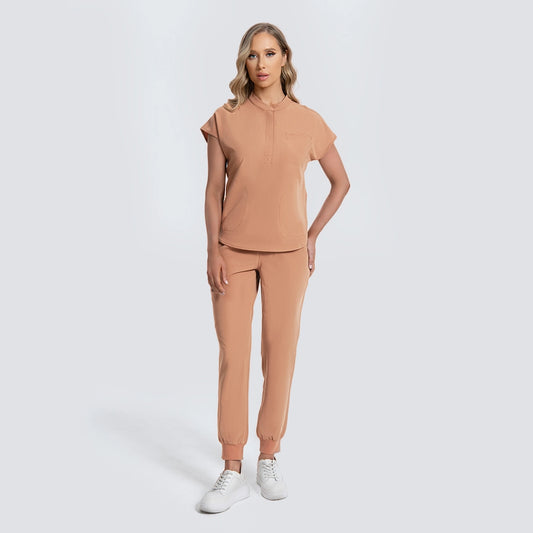



You pull on your jogger scrubs before an early shift. The waistband feels comfortable, the tapered legs look clean and the cuffs sit exactly where they should at your ankles.
Then you put on your shoes—and something feels off.
Maybe the shoes look too bulky next to the narrow cuffs. Maybe the cuffs keep catching on the heel tabs. Or maybe your favorite casual sneakers look good in the mirror but stop feeling comfortable halfway through the shift.
Jogger scrubs make footwear more noticeable than most other scrub pants. A straight-leg hem covers part of the shoe, while a jogger cuff leaves almost the entire shoe visible. That makes footwear an important part of the overall silhouette.
The best shoes for jogger scrubs should:
-
Support the demands of your workday
-
Meet your workplace’s safety and dress requirements
-
Fit securely during walking and quick movement
-
Allow the ankle cuffs to sit correctly
-
Balance the tapered shape of the pants
-
Look clean and professional
For many healthcare professionals, supportive work sneakers are the easiest match. Secure slip-ons and streamlined clogs can also work well when they meet workplace requirements.
This guide explains how different shoes work with jogger scrubs, what to check before buying and how to create a combination that feels comfortable and looks polished throughout your shift.
The Short Answer
The shoes that generally pair best with jogger scrubs are:
-
Supportive athletic sneakers
-
Healthcare or occupational sneakers
-
Lightweight walking shoes
-
Secure slip-on work shoes
-
Streamlined professional clogs
-
Simple leather or synthetic work shoes
Sneakers are usually the most versatile option because their athletic shape complements the tapered leg of jogger scrubs.
The final choice should depend on your role, workplace policies, foot shape and how much time you spend standing or walking.
A shoe that looks good but does not support your actual workday is not the right match. In healthcare, appearance should come after function, fit and safety.
Why Shoes Matter More With Jogger Scrubs
Jogger scrub pants differ from straight-leg and flare styles in one important area: the ankle.
Joggers narrow through the lower leg and finish with an elastic or knit cuff. That cuff normally sits at or just above the ankle, exposing the full upper portion of the shoe.
Because the pants do not fall over the footwear, the shoes become more visually prominent.
The Shoe Completes the Jogger Silhouette
Jogger scrubs have a modern, athletic-inspired shape. Shoes with clean, practical lines continue that visual style naturally.
A streamlined sneaker can make the outfit look balanced and intentional. A very wide or heavily structured shoe creates more contrast beneath the narrow cuff.
That contrast is not automatically wrong, but it changes the overall appearance.
The Cuff and Shoe Need Enough Space
A jogger cuff should sit near the ankle without catching on the back of the shoe.
If the shoe has a high collar, thick padding or a large heel tab, the cuff may:
-
Ride upward
-
Fold underneath itself
-
Bunch above the shoe
-
Become trapped behind the heel
-
Rub against the ankle
The shoe and pants should be tested together rather than evaluated separately.
The Full Shoe Remains Visible
Wear, stains and discoloration are more noticeable when the entire shoe is exposed.
Work shoes do not need to look new every day, but keeping them clean and appropriate for the workplace helps the complete uniform look more professional.
Joggers Are Designed for Movement
Many healthcare professionals choose joggers because the tapered leg keeps loose fabric away from the feet.
The footwear should support the same goal. It should stay securely in place, move naturally and avoid creating another distraction during the shift.
What to Look for in Shoes for Jogger Scrubs
Before comparing different shoe styles, start with the qualities that matter during real healthcare work.
1. Workplace-Appropriate Construction
Check your employer’s dress and safety policies before purchasing shoes specifically for work.
Some workplaces require:
-
Closed toes
-
Closed or secure heels
-
Slip-resistant outsoles
-
Fluid-resistant materials
-
Easy-clean uppers
-
Specific colors
-
Minimal mesh
-
No open ventilation holes
-
Shoes reserved for clinical areas
Requirements vary between hospitals, clinics, laboratories and departments.
A shoe that is appropriate in one workplace may not be permitted in another. Always follow the rules for your specific role.
2. Secure Fit
A work shoe should remain securely attached to your foot as you walk, turn and change direction.
Your heel should not lift excessively. Your toes should not press against the front, and your foot should not slide from side to side.
Slip-on shoes can fit securely, but they need a shape and heel design that work with your foot. If you have to grip the shoe with your toes to keep it on, it is probably not secure enough for an active shift.
3. Underfoot Comfort
Healthcare shifts can involve long periods of standing and walking.
Look for shoes that feel comfortable beneath the heel and forefoot without feeling unstable.
Cushioning should support your natural movement. Extremely soft cushioning is not automatically better if it makes the shoe feel difficult to control.
The amount and type of cushioning that feels best varies from one person to another.
4. Appropriate Support
Support involves more than a raised section beneath the arch.
A supportive work shoe should:
-
Feel stable from heel to toe
-
Stay secure during movement
-
Match the shape and width of your foot
-
Bend naturally at the forefoot
-
Avoid excessive side-to-side movement
If you wear prescribed orthotics, check whether the shoe offers enough interior space and a removable insole.
For ongoing foot pain or individual medical concerns, seek advice from an appropriate healthcare professional.
5. Slip Resistance Where Required
Hospital and clinic floors can become wet or slick.
If your workplace requires slip-resistant footwear, look for shoes that are specifically designed and identified for that purpose.
A textured outsole alone does not automatically mean that a shoe meets a workplace slip-resistance standard. Review the manufacturer’s information rather than relying only on appearance.
6. Easy-Clean Materials
Shoes worn in healthcare environments may require regular cleaning.
Smooth synthetic or treated leather uppers are generally easier to wipe than highly textured fabrics.
Mesh may improve airflow, but it can be more difficult to clean and may not be appropriate in every clinical setting.
Follow your workplace policy and the shoe manufacturer’s care instructions.
7. Breathability
Shoes that trap too much heat can become uncomfortable during a long shift.
Breathability may come from:
-
Mesh panels
-
Perforations
-
Interior lining materials
-
Moisture-managing construction
-
Lightweight upper materials
The correct balance depends on your workplace rules and the amount of protection your role requires.
8. Enough Toe Room
Your toes should have enough room to rest naturally without excessive pressure.
A shoe may look sleek beside jogger cuffs, but that appearance is not useful if the front of the shoe compresses your toes.
When possible, try new shoes later in the day, when your feet may feel slightly fuller than they do in the morning.
9. Reasonable Weight
Heavy shoes can become more noticeable during a long shift.
However, an extremely lightweight shoe is not automatically more comfortable or supportive.
Look for a balance that feels stable and secure without adding unnecessary bulk.
Best Shoes to Wear With Jogger Scrubs
Athletic Sneakers
Athletic sneakers are the most natural visual match for jogger scrubs.
Both pieces draw inspiration from activewear, so they usually create a cohesive silhouette. The jogger cuff shows the entire sneaker, while the tapered leg prevents the outfit from looking overly loose.
Athletic sneakers may work particularly well for healthcare professionals who:
-
Walk frequently
-
Prefer cushioned footwear
-
Want a modern, sporty uniform
-
Need lightweight shoes
-
Prefer laces for an adjustable fit
-
Want a wide range of neutral colors

Why Sneakers Work With Joggers
Sneakers usually have a low or medium profile around the ankle. This gives the jogger cuff enough room to sit naturally.
The visual weight of a standard sneaker also balances the narrow ankle without overwhelming it.
What to Look for
Choose a sneaker based on workplace function rather than casual style alone.
Consider:
-
Secure heel fit
-
Appropriate outsole grip
-
Enough toe-box space
-
Easy-clean materials
-
Removable insoles if needed
-
Moderate ankle height
-
Workplace-approved colors
-
Minimal heel tabs
Running shoes, walking shoes and cross-training shoes can feel very different. Choose according to how you move at work, not simply according to the category printed on the box.
Healthcare and Occupational Sneakers
Healthcare or occupational sneakers combine the general shape of an athletic shoe with features intended for work environments.
Depending on the model, these shoes may include:
-
Slip-resistant outsoles
-
Wipe-clean uppers
-
Fluid-resistant materials
-
Reinforced toe areas
-
Work-focused cushioning
-
Neutral color options
This category often provides one of the easiest combinations of appearance and function for jogger scrubs.
The streamlined shape complements the tapered pant leg, while the work-focused construction may be more appropriate for clinical settings than an ordinary lifestyle sneaker.
Do not assume that every shoe marketed to healthcare workers meets every facility requirement. Check the product specifications and your employer’s policies.
Walking Shoes
Walking shoes can also be a practical match for jogger scrubs.
They often provide a stable shape, moderate cushioning and a less aggressive appearance than performance running shoes.
This makes them useful for healthcare professionals who want comfort without an overly athletic look.
Walking shoes pair easily with:
-
Monochrome jogger sets
-
Classic V-neck scrub tops
-
Lightweight scrub jackets
-
Neutral underscrubs
-
Simple clinic uniforms
Look for workplace-appropriate materials and outsoles rather than assuming that every walking shoe is suitable for clinical use.
Slip-On Work Shoes
Slip-on work shoes create a clean, minimal look with jogger scrubs.
Without visible laces, they keep the ankle area visually simple. They can also be convenient for people who prefer quick on-and-off footwear.
The most important consideration is secure fit.
A slip-on shoe should not move loosely at the heel or require you to grip with your toes to keep it in place.
Slip-Ons Pair Well With Joggers When:
-
The upper has a streamlined shape.
-
The heel stays secure.
-
The opening does not push the cuff upward.
-
The outsole meets workplace requirements.
-
The upper can be cleaned appropriately.
-
The shoe provides enough room for your foot.
-
The shoe remains stable during quick movement.
Low-profile slip-ons create a particularly clean transition between the ankle cuff and the shoe.
High slip-on collars can interfere with cuff placement, so try the pants and shoes together before wearing them through a full shift.
Professional Clogs
Clogs have a long history in healthcare footwear.
They may be easy to clean, provide a roomy front and offer a practical appearance. When paired with jogger scrubs, they create more contrast than sneakers because clogs often have a wider or more structured silhouette.
That contrast can still look professional.
The jogger cuff keeps the ankle visible, while the clog creates a solid visual base.
Different Types of Clogs
“Clog” can describe several constructions:
-
Closed-back clogs
-
Open-back clogs
-
Clogs with heel straps
-
Molded work clogs
-
Leather professional clogs
-
Slip-resistant occupational clogs
Not every construction is permitted in every workplace.
If your facility requires a secure heel, an open-back clog may not meet the dress code.
Clogs Work Best With Joggers When:
-
The cuff stops clearly above the shoe.
-
The shoe does not force the cuff upward.
-
The heel construction meets workplace requirements.
-
The clog stays secure during movement.
-
The color coordinates with the uniform.
-
The shoe does not overwhelm the tapered leg.
Streamlined, low-profile clogs generally create a more balanced look than very wide or high-platform styles.
Simple Leather or Synthetic Work Shoes
A clean leather or synthetic work shoe can make jogger scrubs look slightly more structured.
These shoes may work well in:
-
Clinics
-
Medical offices
-
Reception-facing environments
-
Aesthetic practices
-
Other workplaces where a polished appearance matters
Choose a style with:
-
A closed toe
-
A secure heel
-
A low or moderate profile
-
A flexible forefoot
-
Workplace-appropriate traction
-
Minimal decorative detailing
A formal dress shoe may look disconnected from the athletic shape of joggers and may not provide enough flexibility for an active shift.
The best option sits between a casual sneaker and a traditional dress shoe: clean, practical and easy to move in.
Can You Wear High-Top Shoes With Jogger Scrubs?
High-top shoes can be worn with jogger scrubs, but the cuff placement requires extra attention.
A high shoe collar occupies the same area where the jogger cuff is supposed to sit. This can cause:
-
Bunching above the shoe
-
Cuffs becoming trapped inside the collar
-
Pant legs riding upward
-
A crowded ankle area
-
Friction between the shoe and cuff
If high-tops are permitted in your workplace, try them with the actual jogger pants.
The cleanest approach is usually to let the cuff rest just above the shoe collar. Avoid stuffing the cuff unevenly into the shoe.
A slim high-top generally works more naturally than a heavily padded or oversized design.
Can You Wear Boots With Jogger Scrubs?
Boots can work with jogger scrubs in certain jobs, weather conditions or workplace environments, but they are not the easiest everyday pairing.
The narrow cuff and boot shaft compete for the same space.
Possible approaches include:
-
Letting the cuff rest above a low boot
-
Wearing the cuff smoothly over a narrow ankle shaft
-
Tucking the cuff inside when necessary and permitted
Avoid forcing a thick jogger cuff into a tight boot. This can create pressure, bunching and an uneven silhouette.
For rain, snow or outdoor travel, it may be more practical to wear weather boots during the commute and change into clinical shoes after arriving at work.
Shoes That Can Be Harder to Pair With Jogger Scrubs
No shoe style is universally wrong, but some options require more care.
Very Bulky Sneakers
Oversized soles and wide uppers can make the narrow jogger cuff look disproportionately small.
If you prefer chunky sneakers, combine them with joggers that have slightly more room through the leg rather than an extremely slim cut.
Coordinated colors can also reduce the visual weight. A bulky shoe in a color similar to the pants may look more balanced than a high-contrast design.
Shoes With Large Heel Tabs
A prominent heel tab can catch underneath the jogger cuff.
This may cause the pants to ride upward every time you walk.
Take several long steps and sit down while wearing both items. If the cuff repeatedly catches, the combination may become irritating during a full shift.
Shoes With Very High Collars
Shoes with collars extending above the ankle can interfere with cuff placement.
If the cuff and shoe overlap, make sure the result remains comfortable and does not create pressure or heavy bunching.
Open-Toe Shoes
Open-toe footwear may not meet safety or dress requirements in many healthcare environments.
Always follow your employer’s policy.
Even in nonclinical settings where open-toe footwear is permitted, it may not create the most cohesive professional pairing with jogger scrubs.
Loose Open-Back Shoes
Shoes that do not remain securely attached to the heel may be unsuitable for fast-paced movement.
They may also fail to meet workplace requirements.
Where required, choose a closed-back design or a secure heel strap.
Formal Dress Shoes
Traditional dress shoes can look too formal beside the athletic cuff of jogger scrubs.
They may also lack the flexibility, cushioning or outsole design needed for long periods of movement.
A clean professional work shoe normally creates a better balance.
How Jogger Length Affects Your Shoe Choice
The best footwear pairing starts with correctly fitting joggers.
Shoes cannot fully correct pants that are too short or too long.

Correct Jogger Length
The cuff should rest at or just above the ankle.
It should feel secure without squeezing and should return to its original position after you sit or bend.
This creates a clean transition between the pants and shoe.
Joggers That Are Too Short
If the cuff sits on the calf, more sock and lower leg become visible.
This can make even a low-profile shoe look disconnected from the pants. The cuff may also pull higher when you sit.
Signs that joggers may be too short include:
-
The cuff remains above the ankle while standing.
-
The waistband pulls down when you sit.
-
The knees feel tight during a squat.
-
The cuff repeatedly moves up the calf.
-
The pant leg looks more cropped than tapered.
Joggers That Are Too Long
Excess material stacks above the cuff and can fall onto the shoe.
This reduces the streamlined effect that makes joggers distinctive. Bulky shoes can make the bunching appear even heavier.
Signs that joggers may be too long include:
-
Several folds above the cuff
-
A knee position that sits too low
-
Cargo pockets falling below a useful position
-
Fabric covering part of the cuff
-
The cuff resting against the shoe instead of the ankle
Test the Complete Outfit
When trying joggers, wear the shoes and socks you plan to use at work.
Then:
-
Stand naturally.
-
Walk several steps.
-
Sit in a chair.
-
Bend your knees.
-
Step onto a low, stable surface.
-
Check whether the cuff catches on the shoe.
-
Confirm that the shoe stays secure.
-
Check whether the pants return to position.
The pants and shoes need to work as a complete system.
How to Match Shoe Colors With Jogger Scrubs
Color can make the outfit feel streamlined, balanced or intentionally contrasted.
White Shoes
White shoes create a crisp, modern look with many scrub colors.
They pair especially well with:
-
Navy
-
Royal blue
-
Ceil blue
-
Teal
-
Burgundy
-
Gray
-
Black
-
Green
-
Pastel colors
The main drawback is maintenance. Dirt and discoloration can be more noticeable because jogger cuffs expose the entire shoe.
Choose materials that can be cleaned according to the manufacturer’s instructions.
Black Shoes
Black shoes are practical, versatile and visually grounding.
They work naturally with:
-
Black scrubs
-
Navy scrubs
-
Charcoal scrubs
-
Burgundy scrubs
-
Dark green scrubs
-
Brighter colors that need a neutral base
Black footwear can make the outfit feel slightly more structured and may show certain marks less readily than white shoes.
Gray Shoes
Gray is a softer neutral that works with both light and dark scrubs.
It creates less contrast than white and feels lighter than black.
Gray footwear works particularly well with:
-
Ceil blue
-
Navy
-
Teal
-
Purple
-
Pink
-
Charcoal
-
Caribbean blue
Navy Shoes
Navy footwear creates a cohesive look with blue-based scrub colors.
It is especially effective with navy joggers when the shades are similar enough to feel intentional.
If the two navy tones are noticeably different, use neutral socks or a shoe with additional neutral details to make the contrast look deliberate.
Monochrome Combinations
Matching the shoes closely to the jogger color can create a continuous visual line.
Examples include:
-
Black shoes with black joggers
-
Navy shoes with navy joggers
-
Gray shoes with charcoal joggers
-
White shoes with white or very light scrubs where permitted
The shades do not need to match perfectly, but they should feel related.
Controlled Contrast
A controlled contrast can add personality without making the uniform feel busy.
Examples include:
-
Navy joggers with white shoes
-
Black joggers with gray shoes
-
Burgundy joggers with neutral shoes
-
Ceil blue joggers with navy shoes
-
Green joggers with black shoes
Bright or patterned footwear may be accepted in some environments and restricted in others.
What Socks Should You Wear With Jogger Scrubs?
Jogger scrubs expose more of the ankle, so socks may become part of the outfit.
No-Show Socks
No-show socks create a minimal appearance with low-profile sneakers and slip-ons.
Make sure they stay securely on the heel. Socks that slide underneath the foot can become uncomfortable during a long shift.
Ankle Socks
Ankle socks are one of the easiest options.
They provide more coverage than no-show socks while remaining close to the shoe.
Neutral colors create a simple transition between the jogger cuff and footwear.
Crew Socks
Crew socks are more visible and create a layered, athletic look.
They may also provide extra coverage in cooler workplaces.
Choose a color that coordinates with the pants or shoes if you want the uniform to look polished.
Compression Socks
Some healthcare professionals wear compression socks based on personal preference or professional guidance.
Jogger cuffs make compression socks more visible, so color coordination may matter.
The cuff should not create uncomfortable pressure over the top of the sock. If you use medical-grade compression or have circulation concerns, follow the guidance of an appropriate healthcare professional.
Matching Shoes to Different Jogger Outfits
Monochrome Jogger Sets
A matching top and jogger pant create a continuous block of color.
Pair this look with:
-
White shoes for a fresh, modern effect
-
Black shoes for a grounded, practical effect
-
Gray shoes for softer contrast
-
Matching dark shoes for a streamlined look
Avoid introducing too many competing colors around the ankle.
Two-Tone Scrub Outfits
If your top and joggers are different colors, use the shoes to connect the outfit.
For example:
-
A black top with gray joggers and black shoes
-
A navy top with ceil blue joggers and navy shoes
-
A white underscrub with navy joggers and white shoes
-
A gray jacket with black joggers and gray shoes
Repeating one color makes the combination look intentional.
Printed Scrub Tops
When wearing a printed top with solid joggers, choose a shoe color already present in the print or use a simple neutral.
This keeps the outfit from feeling visually crowded.
Joggers With a Scrub Jacket
A jacket adds more visual weight to the upper body.
Simple sneakers, slip-ons or low-profile clogs keep the lower half balanced.
If the jacket and shoes share a color, the outfit can feel more coordinated.
Joggers With an Underscrub
A visible long-sleeve underscrub creates an athletic, layered appearance.
Sneakers are a natural continuation of that style.
Coordinate the footwear with either the underscrub or jogger pants to create a cohesive look.
Choosing Shoes for Different Healthcare Environments
Your role and workplace should guide footwear more than fashion alone.
Hospitals
Hospital work may involve long corridors, frequent direction changes and extended periods of standing.
Healthcare or occupational sneakers are a practical option when they meet facility requirements.
Look for:
-
Secure fit
-
Appropriate slip resistance
-
Easy-clean construction
-
Underfoot comfort
-
Workplace-approved materials
Clinics and Medical Offices
Some clinic environments involve less walking but more patient-facing interaction.
Streamlined sneakers, clean slip-ons and simple professional work shoes can all pair well with jogger scrubs.
A neutral color palette can make the outfit look especially polished.
Dental Practices
Dental professionals may prefer footwear that is easy to clean and secure during both seated and standing work.
Low-profile work sneakers and streamlined slip-ons balance jogger cuffs without adding unnecessary bulk.
Follow workplace requirements regarding upper materials and coverage.
Veterinary Settings
Veterinary work can involve unpredictable movement, lifting and exposure to messes.
Secure, easy-clean footwear may be particularly useful. Avoid shoes that fit loosely or contain decorative elements that could catch.
The tapered jogger leg helps keep excess fabric away from the feet, while a secure work shoe completes the functional combination.
Medical Spas and Aesthetic Clinics
These workplaces may place greater emphasis on a coordinated appearance.
Monochrome jogger sets with clean slip-ons, minimal sneakers or simple synthetic work shoes create a modern professional look.
Safety and comfort should remain priorities even when appearance matters.
Laboratories
Laboratory dress requirements may be more specific about coverage and materials.
Check policies regarding:
-
Closed toes
-
Secure heels
-
Ventilation holes
-
Upper materials
-
Chemical exposure
-
Shoes reserved for laboratory areas
Choose function first, then coordinate the color and shape with your jogger scrubs.
Long-Term Care and Home Health
These roles may involve varied surfaces and movement between indoor and outdoor environments.
A stable, secure walking or work sneaker can be a practical choice.
If shoes are exposed to outdoor weather, consider whether a separate indoor pair would be more appropriate.
Common Shoe and Jogger Mistakes
Choosing Shoes Only by Appearance
A shoe may look perfect next to the tapered cuff but become uncomfortable after several hours.
Evaluate fit, function and workplace suitability before considering color or trend.
Ignoring the Jogger Cuff
A high shoe collar, large heel tab or bulky upper can interfere with the cuff.
Test the combination while walking, sitting and bending.
Wearing Joggers That Are Too Short
If the cuff rests on the calf, the shoe may look disconnected from the pants and the fabric may pull during movement.
Choose the correct jogger length before trying to solve the appearance with different shoes.
Wearing Joggers That Are Too Long
Heavy bunching above the cuff removes the clean, tapered effect.
A different jogger length will usually improve the outfit more effectively than changing the footwear.
Assuming Every Sneaker Is Work-Appropriate
Lifestyle sneakers may not have the outsole, secure fit or easy-clean construction required for your job.
Check the product details and workplace policies.
Adding Too Many Colors
Joggers already draw attention to the ankle and shoe.
If the top, pants, socks and shoes all use unrelated colors or patterns, the outfit may feel less cohesive.
Choose one main scrub color and one or two supporting colors.
Forgetting to Test Shoes During Movement
Standing in front of a mirror does not reveal how the cuff and shoe will interact during work.
Always walk, sit, squat and take a longer step before deciding that the combination fits correctly.
A Quick Shoe-and-Jogger Fit Test
Before wearing a new combination to work, complete this test at home.
1. Check the Cuff
The jogger cuff should sit near the ankle without resting awkwardly on the shoe.
2. Walk Quickly
Make sure the cuff does not catch on the heel tab and the shoe remains secure.
3. Sit Down
Check whether the cuff rises dramatically or the shoe collar presses into the ankle.
4. Squat Comfortably
The pants and shoes should allow natural movement without pulling from the ankle to the hip.
5. Change Direction
Turn and take several quick steps.
The shoe should feel stable rather than loose beneath the foot.
6. Inspect the Overall Silhouette
Look at the outfit from the front and side.
The footwear should create a balanced base for the tapered leg rather than making the ankle area feel crowded.
7. Review Workplace Requirements
Confirm that the toe, heel, outsole, upper materials and color meet your employer’s rules.
If the combination passes all seven steps, it is more likely to work through a real shift.
The Bottom Line
Jogger scrubs put your footwear on display, but choosing the right shoes is about more than appearance.
The tapered leg and ankle cuff work best with shoes that feel secure, support the demands of your shift and create a clean transition from the pants to the floor.
For many healthcare professionals, workplace-appropriate sneakers are the most versatile option. Secure slip-ons and streamlined clogs can also work well, while high-tops, boots and bulky shoes require more attention to cuff placement.
Start with your workplace requirements. Choose footwear that fits securely, feels comfortable during your normal shift and does not interfere with the jogger cuff.
Then use color and shape to bring the outfit together.
The best combination is one you do not have to think about once your shift begins.
Frequently Asked Questions
What Shoes Look Best With Jogger Scrubs?
Streamlined sneakers, healthcare work sneakers, secure slip-ons and low-profile clogs generally create the most balanced look.
The final choice should also meet your workplace requirements and fit securely during movement.
Can I Wear Running Shoes With Jogger Scrubs?
Yes, provided the shoes fit securely and are appropriate for your work environment.
Check whether the outsole, upper materials and level of coverage meet your facility’s policies.
Can I Wear Clogs With Jogger Scrub Pants?
Yes. Streamlined clogs can pair well with joggers.
Confirm that the heel construction is permitted and that the cuff does not catch on the shoe.
Can I Wear High-Top Sneakers With Jogger Scrubs?
You can, but the shoe collar may interfere with the ankle cuff.
The cuff normally looks cleanest when it rests just above the high-top rather than bunching inside it.
What Color Shoes Go With Navy Jogger Scrubs?
White, black, gray and navy shoes all pair well with navy joggers.
White creates a crisp contrast, while black or navy produces a more understated appearance.
What Socks Should I Wear With Jogger Scrubs?
No-show, ankle and crew socks can all work.
Choose according to comfort, shoe fit, workplace policy and how much sock you want to remain visible.
Should Jogger Scrub Cuffs Touch the Shoes?
The cuff should normally sit near the ankle and may lightly meet the top of a low-profile shoe.
It should not bunch heavily, become trapped underneath the shoe collar or repeatedly catch on the heel.
Are Slip-On Shoes Appropriate for Healthcare Work?
Some secure, work-specific slip-ons may be appropriate, while loose or open-back designs may not meet workplace requirements.
Review your employer’s policy and the shoe specifications.
How Can I Stop Jogger Cuffs From Catching on My Shoes?
Choose shoes with a lower collar and minimal heel tab, confirm that the joggers are the correct length and test the combination while walking and sitting.
How Can I Make Jogger Scrubs Look More Professional?
Choose the correct size and length, wear clean workplace-appropriate shoes, coordinate the colors and balance the tapered pants with a polished scrub top or jacket.