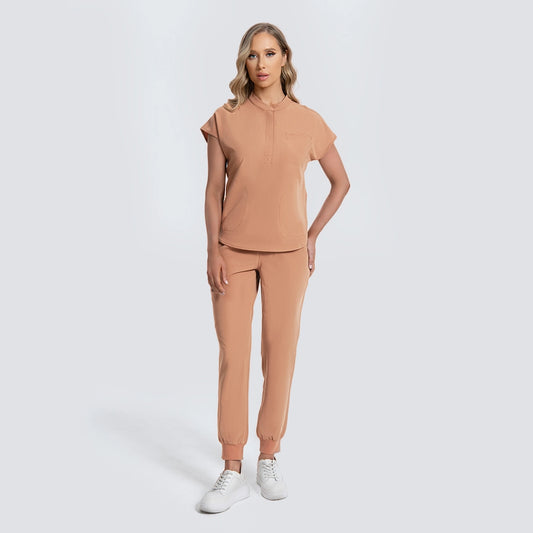



A good set of scrubs moves with you through countless steps, reaches, bends, and seated tasks throughout the day. Beyond a neat appearance, it should offer comfortable fabric, room to move, and practical details that support your routine.
If you want an understated color that is easy to coordinate, dark harbor scrubs are worth considering. Their deep blue-gray appearance creates a subtle look that works as a matching set or alongside lighter and darker basics.
When choosing dark harbor scrubs, color is only the beginning. Fabric, sizing, pocket placement, and care requirements all influence how the garments feel over time. This guide explores those everyday considerations to help you find scrubs that suit your needs.
1. The Styling Appeal of Dark Harbor
Dark Harbor offers a useful starting point for a deep blue-gray work wardrobe. Compared with solid black, it introduces more visible color. Alongside brighter blues, it creates a quieter look that suits a simple approach to dressing.
Coordinating this shade does not need to be complicated. A matching top and pants create a consistent outfit, while a light gray or white undershirt introduces gentle contrast.
However, a color name cannot replace checking the garment itself. Lighting, screen brightness, and fabric texture can make a shade appear different in photographs. Review the specific product images and check the actual color when your order arrives.
If your workplace has a designated uniform color, confirm the requirements before buying. A shade that looks close to navy or gray in a photograph may not meet the dress code.
2. Consider Fabric Before Style
Scrubs remain in contact with your body for hours, so fabric often has a greater effect on comfort than decorative details. Start by reviewing the composition, weight, stretch, and care instructions before deciding on your preferred look.
Look Beyond Softness
A soft feel creates a positive first impression, but touching a garment briefly cannot tell you everything about wearing it for a full day.
If your work involves frequent movement, consider whether the material clings, pulls when you reach, or sags when pockets are filled. In warmer rooms, fabric weight and airflow also deserve attention.
In cooler environments, an approved undershirt may be helpful. Instead of simply choosing the lightest fabric, look for a balance between comfort, coverage, and easy care.
Let Stretch Support a Good Fit
Stretch can provide extra room when you reach, bend, and sit. It does not mean sizing is less important or that a closer fit is always better.
Ideally, the garment should rest naturally against your body while standing and give comfortably as you move. It should not remain tightly stretched across your shoulders, hips, or knees.
If constant stretching is necessary to create enough room, reconsider the size or cut.
Check Construction as Well as Composition
Fabrics with similar fiber content can still feel and look different because of their weave, weight, and finish.
Examine the neckline, seams, pocket edges, and waistband. Is the binding smooth? Are the stitches tidy? Do the pocket openings look secure? Is the drawstring easy to adjust? Clear product details help you assess whether a garment suits your needs.
3. Test the Fit Through Movement
Scrubs should remain comfortable during everyday tasks. When trying them on, wear the shoes and permitted layers you expect to use at work, then complete a few simple movements.
Raise your arms to check for tension across the shoulders and back. Sit down to see whether the waistband presses into your abdomen. Lean forward to check the neckline and lower-back coverage. Walk around to make sure the hems do not interfere with your steps.
These movements can reveal problems that are easy to miss while standing in front of a mirror.
Tops: Balance Room and Shape
A tight top may restrict movement, while an excessively loose one can leave extra fabric hanging forward when you bend. Look for reasonable space through the shoulders, chest, back, and underarms while maintaining a tidy shape.
Neckline depth should also suit your work. Lean forward during the fitting to check whether it stays in place and whether an approved undershirt is necessary.
Length depends partly on how you wear the top. If you leave it untucked, observe where the hem sits when you walk and bend. If you tuck it in, check for excess fabric around the waist and pulling when you sit.
Pants: Check the Waist, Hips, and Length
A comfortable waist does not guarantee a comfortable pair of pants. Room through the hips, thighs, and crotch also affects sitting, squatting, and taking longer steps.
Straight-leg pants create a natural outline and work with various shoe shapes. Tapered pants narrow toward the ankle for a more defined silhouette. Joggers require an additional check: the cuffs should feel comfortable, and the style must be allowed at work.
Length matters, too. Long hems can bunch up or touch the floor, while short hems may not create the fit you want. Compare the listed inseam with a pair of pants that already fits well.
4. Choose Pockets Around Your Routine
For anyone carrying work essentials, pocket placement and capacity directly affect convenience. Rather than comparing pocket counts, start with what you actually need.
Which items do you reach for most often? Which are heavier? Where might they press against your body when you sit? Answering these questions makes it easier to assess the layout.
A chest pocket may suit certain small, lightweight items, but check whether they stay secure when you lean forward. Lower pockets generally offer more space, although overfilling them can pull down the hem. Side pockets on pants may be easy to access, but their contents should not interfere with sitting or walking.
If possible, try the pockets with items similar in size and weight to your everyday essentials. Check whether the garment hangs unevenly and whether everything remains easy to reach.
Always follow workplace requirements for carrying, storing, and handling items.
5. How to Style Dark Harbor Scrubs
The purpose of workwear styling is to accommodate temperature, support movement, and maintain a neat appearance. A few basic pieces are enough to build a practical wardrobe around dark harbor scrubs.

Matching Sets: Simple and Convenient
A matching top and pants are an easy starting point. The consistent color creates a coordinated appearance and reduces the time spent choosing an outfit.
Consider the shapes together. A relaxed top with loose pants creates a roomier silhouette, while a more structured top with straight-leg pants offers a defined outline. Either approach should allow comfortable movement.
If you buy the pieces separately, compare them under the same lighting before deciding to keep them.
Light Gray Undershirts: Soft Contrast
Light gray introduces a gentle change in tone alongside deep blue-gray scrubs.
Choose an undershirt that lies smoothly beneath the top without bunching at the shoulders, underarms, or waist. Sleeve length must also meet workplace requirements and allow you to perform your tasks comfortably.
White Undershirts: A Brighter Combination
Where permitted, a white undershirt adds contrast to a darker uniform. Any visible neckline or cuffs should sit neatly without rolling or sagging.
For a subtle effect, keep the visible white areas small and let the contrast remain a detail.
Black Footwear: Easy Coordination
Black footwear pairs easily with dark harbor scrubs. Still, fit, workplace requirements, floor conditions, and cleaning needs should guide your choice.
When trying on the full outfit, check where the pants meet the shoes. Hems should not catch around the shoe opening or extend beneath the soles.
Outer Layers: Warmth With Room to Move
If you need a jacket, a coordinating basic color keeps the outfit simple. Once it is on, check that you can move your shoulders freely, that the sleeves stay out of the way, and that important pockets remain accessible.
A practical outfit should let you get dressed and turn your attention to work.
6. Care for Your Scrubs
Keeping dark harbor scrubs in good condition starts with reading the care label before the first wash. Fabrics differ in how they tolerate washing temperatures, tumble drying, and ironing, so color alone should not determine the method.
Follow any workplace laundering or handling procedures. Where home washing is permitted, consider these habits:
- Sort appropriately. Separate items according to color and fabric type, and avoid washing scrubs with heavily lint-shedding towels or fleece.
- Use detergent as directed. More is not necessarily better. Follow the instructions for the load and washing machine, and rinse thoroughly.
- Follow drying requirements. Check whether tumble drying is allowed and which temperature is suitable.
- Put garments away promptly. Unfold, hang, or fold them after drying to reduce creases from sitting in a pile.
- Care for matching pieces consistently. Similar wearing and washing schedules can help tops and pants maintain a more consistent appearance.
Dark fabric can still show lint, dust, and detergent residue. Decide when garments need changing or washing according to their use and your workplace requirements.
7. Check These Details Before Buying
A short checklist can help you look beyond product photography and make a more informed choice:
- Does the color and style meet your workplace dress code?
- Does the fabric weight and stretch suit your working environment?
- Can you reach, bend, and sit comfortably?
- Have you checked the top and pant sizes separately?
- Is the inseam suitable for your usual work shoes?
- Do the pocket positions and capacity suit your routine?
- Are the care instructions compatible with your laundry arrangements?
- Do you understand the return conditions?
When trying an unfamiliar style, consider starting with one set. Assess the fit within the retailer’s return conditions, then decide whether you need additional pieces for your schedule.
Make Dark Harbor Part of Your Everyday Work Wardrobe
The appeal of dark harbor scrubs lies in their understated color and flexible styling options. Their suitability, however, comes down to how they feel and function: whether your shoulders move freely, the waistband remains comfortable when seated, the pockets work for you, and the garments are manageable to care for.
Consider color, fabric, fit, and details together, guided by your environment and habits. A carefully chosen uniform can reduce the need for repeated adjustments and make getting ready for work easier.