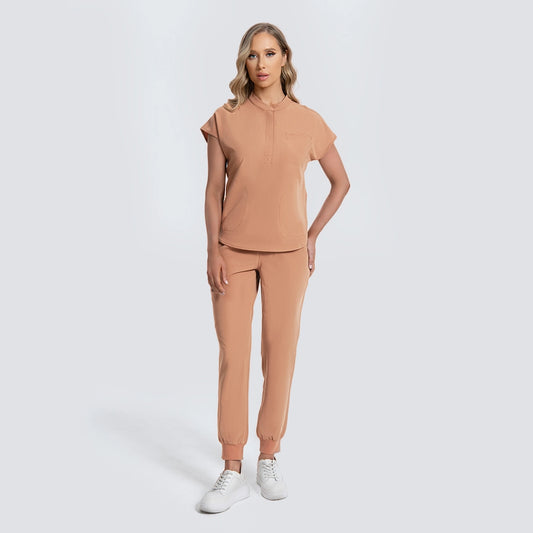



Scrub joggers have become a familiar part of modern healthcare uniforms. Their tapered legs, fitted ankle cuffs and athletic-inspired shape offer a different look from traditional straight-leg scrub pants.
For many healthcare professionals, joggers provide controlled hems, easy movement and a clean modern silhouette. For others, the fitted calf, ankle cuff or casual appearance may not suit their workplace or daily responsibilities.
So, who should wear scrub joggers—and who might be more comfortable in another style?
The answer has less to do with age or body type and more to do with fit, movement, footwear and workplace requirements.
What Are Scrub Joggers?
Scrub joggers are medical work pants with legs that taper toward the ankle and end in fitted elastic or ribbed cuffs.
Most styles also include:
-
An elastic waistband
-
An adjustable drawstring
-
Stretch fabric
-
Front or side pockets
-
One or more cargo pockets
-
A slightly relaxed fit through the hips and thighs
-
A narrower lower leg
The design is influenced by athletic clothing, but healthcare joggers are made to function as workwear. They should provide appropriate coverage, practical storage and enough durability for repeated washing.
A well-designed scrub jogger should feel streamlined without becoming tight.
Who May Benefit From Wearing Scrub Joggers?
Healthcare Professionals Who Move Constantly
Nurses, medical assistants, emergency-department staff and other active healthcare workers may appreciate the controlled shape of jogger pants.
Fitted cuffs prevent loose hems from moving around the shoes while the wearer walks quickly, climbs stairs or changes direction. Stretch fabric can also support repeated bending, squatting and reaching.
The jogger silhouette should still provide enough room through the hips, thighs and knees. A narrow appearance should come from the tapered lower leg—not from restricting movement across the entire body.

People Who Frequently Kneel or Work Near the Floor
Veterinary professionals, physical therapy staff and healthcare workers who regularly kneel may benefit from pants that stay close to the ankles.
Traditional wide or overly long hems can touch the floor or shift around the shoes. Jogger cuffs help keep the lower leg controlled while the wearer changes between standing, squatting and kneeling positions.
This does not mean the cuffs should feel tight. They should remain secure without leaving deep marks or riding excessively upward.

Anyone Who Struggles With Excess Pant Length
Finding the correct inseam can be difficult, particularly when a brand offers only one standard length.
Jogger cuffs can prevent slightly long pants from dragging, making the style useful for some petite wearers. However, cuffs cannot fix every length problem. Pants that are significantly too long may still bunch heavily above the ankle.
Whenever possible, choose joggers offered in petite, regular and tall lengths. The cuff should sit naturally near the ankle without excessive stacking through the lower leg.
Professionals Who Prefer a Modern Uniform
Joggers provide a contemporary, athletic-inspired appearance. They work well in workplaces that allow modern scrub silhouettes and relaxed professional styling.
A matching solid-color scrub top can keep the outfit coordinated. Clean, simple work shoes also help the joggers look intentional rather than overly casual.
Navy, black, charcoal, teal and wine are versatile choices for a streamlined jogger set.
Workers Who Want Controlled Hems Around Their Shoes
Loose fabric can become inconvenient when it moves around the top of a shoe or catches beneath the heel.
Jogger cuffs keep the pant hem above the shoe, which can be especially practical for people who walk long distances during a shift.
Controlled hems do not replace proper sizing. If the pants pull upward with every step or expose too much of the lower leg, a longer inseam may be needed.
Who Might Prefer Not to Wear Scrub Joggers?
Employees Whose Workplace Requires Traditional Scrub Pants
Some healthcare organizations have detailed dress codes. They may require straight-leg pants, facility-issued uniforms or a specific approved style.
Even if joggers are comfortable, workplace rules should come first.
Before purchasing several pairs, confirm that cuffed scrub pants are permitted in your department. Requirements may vary between general patient-care areas, surgical environments, laboratories and administrative clinics.
People Who Dislike Pressure Around the Calves or Ankles
Joggers taper through the lower leg. If the calf is cut too narrowly or the cuff is too firm, the pants may feel restrictive.
People who prefer more airflow or room around the lower legs may be more comfortable in straight-leg or relaxed-fit scrub pants.
This is a fit preference, not a body-type rule. Joggers can work for many different shapes when the cut and size are correct.
Professionals Who Wear Specific Boots or Protective Footwear
Certain jobs require footwear that extends higher around the ankle. A fitted cuff may bunch above the boot, become uncomfortable inside it or leave a gap between the pants and footwear.
Straight-leg pants may fit more naturally over some types of approved work shoes or boots.
If specialized footwear is required, try the complete uniform together. Do not evaluate the pants with casual shoes that will never be worn during the actual shift.
Anyone Who Wants a More Traditional or Formal Appearance
Joggers have a sporty silhouette. Although modern styles can look professional, straight-leg pants generally create a more traditional appearance.
Doctors, clinic managers, dental professionals and employees in consultation-heavy environments may prefer straight or tapered trousers when they want a more structured look.
The best option depends on workplace culture. Joggers may look completely appropriate in one clinic and overly casual in another.
People Who Feel Cold Around the Ankles
Because jogger cuffs sit close to the ankle, they may leave a small area exposed when the wearer sits or bends.
In cold hospitals, this can become uncomfortable. Longer socks may help, but anyone who prefers full lower-leg coverage may find straight-leg pants warmer.
The cuff should not rise halfway up the calf during ordinary movement. If it does, the inseam is probably too short.
What Makes a Good Pair of Scrub Joggers?
Not every jogger offers the same fit or performance.
Look for the following features:
Comfortable Stretch
The fabric should move through the hips, thighs and knees without becoming transparent or losing its shape.
Four-way stretch can be useful for active roles, but the material should still feel durable enough for frequent washing.
A Stable Waistband
A combination of elastic and an adjustable drawstring usually provides a secure fit. The waistband should stay in place while bending without rolling, sliding or creating excessive pressure.
Cuffs That Stay Comfortable
The cuffs should be secure but not tight. Check whether they rub the skin, leave strong marks or twist during movement.
Soft ribbed cuffs may feel different from cuffs made from the same woven fabric as the pants. Try both if possible.
Practical Pocket Placement
Joggers often include cargo pockets, but pocket location matters.
A heavy phone placed directly over the knee can become uncomfortable while kneeling. Secure side pockets positioned slightly above the knee may work better.
Avoid filling every pocket. Too much weight can pull the waistband downward and affect the way the pants move.
The Correct Rise and Inseam
The rise should provide secure coverage while sitting and bending. The inseam should allow the cuff to rest naturally near the ankle.
Trying a larger size will not always correct a length problem. Look for dedicated inseam options whenever possible.
How Should Scrub Joggers Fit?
A good pair of scrub joggers should:
-
Sit securely at the waist
-
Provide room through the hips and thighs
-
Allow comfortable squatting and kneeling
-
Taper gradually below the knee
-
Rest near the ankle without excessive bunching
-
Keep the cuff secure without feeling tight
-
Maintain appropriate coverage while sitting
-
Hold necessary pocket items without sagging
Test the pants through realistic movements before deciding.
Walk quickly, sit in a low chair, climb a few steps, squat carefully and kneel on one knee. Make sure the waistband remains stable and the cuffs return to their correct position.

Joggers or Straight-Leg Scrubs: Which Is Better?
Neither style is universally better.
Choose joggers if you want controlled hems, a modern silhouette and a tapered lower leg. They may be particularly useful for active shifts, floor-level work and anyone who dislikes loose fabric around the shoes.
Choose straight-leg pants if you prefer more room around the calves, need coverage over certain footwear or want a traditional appearance.
Some healthcare professionals keep both styles in their wardrobe. They wear joggers during highly active shifts and choose straight-leg pants for colder days, formal clinical settings or departments with different dress expectations.
Frequently Asked Questions
Are Scrub Joggers Professional?
Yes, when they fit correctly, comply with workplace policy and are paired with a clean, coordinated scrub top. Extremely tight, heavily bunched or visibly worn joggers may not create the same professional appearance.
Can Doctors Wear Scrub Joggers?
Doctors can wear joggers if their employer permits them and the style supports their responsibilities. Some may prefer straight-leg pants for consultation-heavy or more formal settings.
Are Scrub Joggers Good for Nurses?
They can be. Nurses who move frequently may appreciate the controlled hems and stretch. Pocket placement, waistband comfort and correct inseam remain important.
Can You Wear Compression Socks With Scrub Joggers?
Yes. Jogger cuffs can make compression socks easier to access, although the sock and cuff should not create uncomfortable pressure together.
Should Scrub Joggers Show the Ankle?
A small natural gap may appear depending on the wearer’s position and shoes. The pants should not rise excessively or expose a large part of the lower leg during normal movement.
Are Joggers Suitable for Every Body Type?
Joggers can work for many body types, but brands use different proportions. The right rise, thigh room, calf width and inseam are more important than the size printed on the label.
Choose the Pants That Support Your Work
Scrub joggers are a useful option, but they are not a requirement for looking modern or professional.
They work especially well for people who move constantly, kneel frequently, prefer controlled hems or enjoy a tapered silhouette. Straight-leg or relaxed scrub pants may be better for employees who need additional lower-leg room, wear specialized footwear or work under a traditional dress code.
The best decision comes from testing the pants during realistic movement and considering the demands of the workplace.
Choose the style that stays secure, allows you to move comfortably and lets you focus on your shift—not on adjusting your uniform.