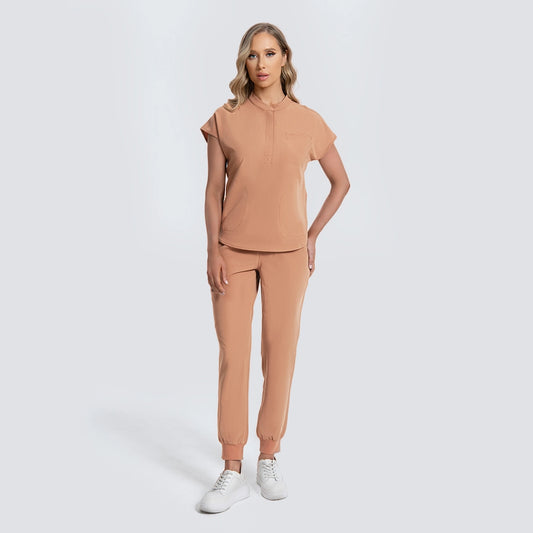



When you get ready for work, your scrubs are often among the first things you put on. They need to move with you as you walk, bend, reach, sit, and switch between tasks. A well-chosen set should let those movements happen naturally, without constant waistband adjustments, tugging at your shirt, or searching for a pocket.
Among the many uniform colors available, black scrubs offer a clean, understated look that is easy to coordinate. Black creates a consistent appearance and pairs readily with different undershirts, shoes, and outer layers.
Color, however, is only the starting point. What really makes a set worth buying is whether the fabric suits your work environment, the cut allows comfortable movement, the details support your routine, and the garments hold up through repeated washing.
This guide walks through those considerations to help you balance appearance with the practical demands of your workday.
1. Why Choose Black Scrubs?
One of the most noticeable qualities of black scrubs is their streamlined appearance. Compared with busy patterns or strongly contrasting colors, black makes it easier to create a coordinated outfit. If you want to spend less time deciding what to wear, a matching black top and pants can simplify your morning.
Black is also versatile. Where workplace rules allow, you can pair it with white, gray, or navy undershirts. Adding an approved jacket when temperatures change is straightforward, too.
Still, black does not automatically make an outfit look professional. A tidy neckline, an appropriate pant length, minimal wrinkles, and a surface free of visible lint all contribute to the overall impression. Treat neatness, fit, and ease of movement as your priorities.
Before buying, check your employer’s dress code. Some workplaces use uniform colors to distinguish roles or teams and may also specify styles, identification, and layering requirements. Personal preference comes into play once those requirements are met.
2. Start With the Fabric
When shopping online, it is easy to focus on color and silhouette. Yet the fabric is what touches your skin and shapes much of your experience throughout the day.

Look Beyond a Soft Feel
Softness is a welcome feature, but it should not be your only criterion. A fabric can feel pleasant at first touch and still feel warm during movement, pull when you sit, or lose its shape after washing.
Read the fiber composition, fabric weight information, stretch description, and care instructions together. Terms such as “premium,” “skin-friendly,” or “all-day comfort” offer limited guidance without more specific details.
Ask practical questions instead: Will the fabric suit the room temperature? Does it cling as you move? Will loaded pockets pull it out of shape? These considerations are more useful than broad marketing claims.
Understand What Different Fibers Contribute
Cotton, polyester, and blends containing stretch fibers are all used in scrubs.
Cotton-containing fabrics often offer a natural feel and absorb moisture. Their tendency to wrinkle, shrink, or dry more slowly also depends on the blend and finish. Polyester is often used to support durability, shape retention, or faster drying. Breathability, however, depends on the fabric’s construction and thickness as well as its fiber content.
Stretch fibers can provide extra give, but a stretchy fabric does not mean you should choose a smaller size. Clothing that remains stretched tightly across your body can still feel restrictive around the shoulders, waist, or knees.
A suitable fabric should maintain its shape when you stand naturally and allow room when you move. Stretch should complement a good cut rather than compensate for a poor fit.
Match Fabric Weight to Your Environment
The same black scrubs can feel very different in different workplaces. If rooms are warm and you move frequently, lighter fabric and airflow may matter most. In strong air conditioning or during longer periods of sitting, an approved undershirt may be useful.
The thinnest fabric is not always the best option. Very lightweight material may reveal pocket contents, the edges of an undershirt, or creases more clearly. Consider comfort, coverage, and durability together.
3. Judge the Fit by How You Move
Scrubs that look good while you stand still may feel different during work. The simplest way to assess the fit is to repeat a few everyday movements while trying them on.
Raise both arms and check for pulling across the shoulders or excessive lifting at the hem. Sit down and notice whether the waistband digs into your abdomen. Bend or squat to see whether the back stays covered and the seat or thighs feel tight.
These simple movements often reveal issues that a quick look in the mirror misses.
Tops: Leave Room Without Excess Bulk
A scrub top should provide reasonable space through the chest, back, and shoulders. A tight fit can restrict reaching, while excessive fabric may get in the way when you lean forward.
Pay attention to the neckline as well. A V-neck creates a clean look, but its depth should suit your work requirements. Lean forward during the fitting to check coverage and determine whether an approved undershirt is needed.
Length also depends on how you wear your top. If you leave it untucked, check where the hem sits as you walk and bend. If you prefer tucking it in, make sure the fabric does not bunch around your waist or pull uncomfortably when you sit.
Pants: Check More Than the Waist
Comfort depends on the waist, hips, thighs, and length together. Some pants fit at the waist but become tight across the thighs when you sit. Others feel loose while standing yet need frequent adjustment as you walk. Either situation suggests the size or cut may not be right.
Straight-leg pants generally work with a range of shoe shapes. Tapered pants narrow toward the lower leg for a more defined silhouette. With jogger styles, check that the ankle cuffs feel comfortable and that the design is permitted at work.
No single shape suits everyone. Prioritize unrestricted movement and hems that do not interfere with walking, then choose the silhouette you prefer.
4. Choose Pockets That Work for Your Routine
Pockets can seem like a minor feature, but they influence how easily you carry and retrieve everyday essentials.
Before shopping, think about your habits. What do you carry most often? Which items need to be accessible quickly? What tends to slip out? Use those answers to assess the pocket layout rather than simply counting pockets.
A chest pocket may suit small, lightweight items, but you should consider how securely they stay in place when you lean forward. Lower pockets on a scrub top usually provide more room, although overfilling them can pull down the hem. Pant pockets may be convenient to reach, but their contents should not press uncomfortably into your body when you sit.
Deeper pockets can help keep items contained, yet they are not always convenient for frequently used small objects. Dividers may help you organize belongings, but narrow compartments can limit what fits.
If possible, try the scrubs with items similar in weight to what you normally carry. Walk and sit down, then check whether the clothing pulls to one side or sags. This gives you a better sense of function than looking at empty pockets.
Follow workplace requirements for carrying and handling items. A convenient pocket is not automatically an appropriate place for every object.
5. Black Does Not Make Dirt Disappear
Some people choose black scrubs because they expect them to hide stains. More precisely, black makes certain marks less noticeable while highlighting others.
Pale lint, dust, skin flakes, detergent residue, and some dried water marks can stand out against dark fabric. This may be particularly noticeable if you have pets that shed or regularly handle light-colored textiles.
Whether a garment needs changing or washing should never depend only on visible marks. Color is an aesthetic choice and does not replace your workplace’s hygiene or laundry procedures.
When comparing products, look for information about lint attraction and repeated comments about pilling, loose fibers, or residue after washing. Reviews can be helpful, but washing methods and working conditions vary, so treat them as context rather than a guarantee.
Before putting on your scrubs, check the shoulders, chest, and thighs. Light-colored lint is often easy to spot in these areas.
6. Keep Styling Simple and Practical
Styling black scrubs does not need to be complicated. For workwear, the main purpose of layering and coordination is to suit the temperature, support movement, and maintain a tidy appearance.

If undershirts are allowed, choose a smooth-fitting style that sits close to your body without feeling restrictive. Thick layers can add bulk around the shoulders and underarms. Sleeves that are too long or slip out of place may need frequent adjustment. Follow your role’s requirements for sleeve length and layering.
A black undershirt creates a consistent look. Gray or white adds contrast, while navy offers a more understated variation. One or two basic colors are usually enough.
Choose shoes according to workplace requirements, fit, cleaning needs, and floor conditions. Black footwear coordinates easily with the outfit, but any permitted color can work. Practical suitability should guide the decision.
Socks, work jackets, and identification accessories should also support your routine and follow relevant requirements. Once dressed, check your movement again: Do the shoes and pant hems interfere with each other? Does the jacket limit reaching? Are important pockets covered?
A useful outfit lets you turn your attention back to your work.
7. Care for the Fabric and Color
Read the care label before washing black scrubs for the first time. Fabrics differ in how they tolerate water temperature, tumble drying, and ironing. Sharing the same color does not mean garments require the same care.
If your employer provides laundering or specifies a process, follow those instructions. Work-related contamination must also be handled according to the applicable procedures. Color preservation should not determine how such clothing is cleaned.
Where home laundering is permitted, and the garment label allows it, consider these habits:
- Sort by color and fabric type. Avoid washing scrubs with lint-shedding towels or fleece to reduce light-colored fibers on the surface.
- Use detergent as directed. More is not necessarily better. Follow the product and machine instructions for the load, and rinse thoroughly.
- Reduce surface friction. Where appropriate, turning garments inside out can reduce direct rubbing on their outer surfaces.
- Follow drying instructions. Check whether tumble drying is allowed and which temperature is suitable.
- Put clothing away promptly. Unfold, hang, or fold garments after drying to reduce creases from sitting in a pile.
Black garments may change color over time. If a top and pants are washed at very different frequencies, their shades may gradually become less consistent. A similar wear and care schedule can help you maintain a coordinated set.
8. Reduce the Risk of Buying the Wrong Set
When trying a brand for the first time, avoid relying only on your usual S, M, or L. Sizing and cuts can vary between brands and even between collections from the same label.
Measure yourself and compare the results with the specific product’s size chart. Check whether the chart lists recommended body measurements or actual garment measurements, as these are not interchangeable.
Pay particular attention to pant length. If petite, regular, and tall options are available, compare the stated inseam with pants that already fit you well. An unsuitable length can affect everyday comfort even when the waist fits correctly.
When considering your budget, weigh expected frequency of use alongside durability. A lower-priced set that needs constant adjusting or quickly loses its shape may not suit frequent wear. A higher price, on the other hand, does not automatically mean the garment will suit your body or working conditions.
If practical, begin with one set and assess the fit before buying more. Keep any trial within the retailer’s return conditions, especially before washing or wearing the garments to work. The number of sets you need will depend on your schedule, washing frequency, and drying arrangements.
9. A Final Checklist Before You Buy
Before placing an order, ask yourself:
- Does my workplace allow black scrubs and this neckline, sleeve length, and pant style?
- Does the fabric’s weight and stretch suit my working environment?
- Can I raise my arms, bend, and sit comfortably?
- Do the pocket positions, depths, and capacity suit what I carry?
- Have I checked the top size, pant size, and inseam separately?
- Are the care requirements compatible with my laundry arrangements?
- Do I understand the return policy and the condition required for a return?
These questions help you move beyond an appealing product photo and assess whether a set will fit your everyday needs.
Choose Black Scrubs That Make Your Workday Easier
Choosing black scrubs means choosing clothing that stays close to your skin and moves with you throughout the day. Fabric, fit, pockets, sizing, and care all influence how well that clothing performs in practice.
The right set does not have to offer the most features or carry the highest price. It should meet your workplace requirements, feel comfortable when you move and sit, keep appropriate essentials within reach, and remain tidy with regular care.
Start with your working environment and personal habits. When those details guide the decision, black scrubs can become a dependable part of your everyday work wardrobe.