

Choosing between relaxed-fit and slim-fit scrubs is not simply a matter of fashion. The cut of a uniform affects how freely you move, how the fabric sits during a long shift and how professional the complete outfit looks.
Relaxed-fit scrubs provide more room through the body, while slim-fit scrubs follow the wearer’s shape more closely. Neither option is automatically more comfortable or more professional. The better choice depends on your proportions, work environment, preferred level of movement and the way you like your uniform to feel.
This practical comparison explains the main differences and helps you decide which fit is more suitable for your workday.
Fit Is Not the Same as Size
Before comparing the two styles, it is important to separate fit from size.
“Size” refers to the garment’s basic measurements, such as the chest, waist and hips. “Fit” describes how those measurements are distributed and how closely the garment follows the body.
A relaxed-fit scrub top in size medium and a slim-fit top in the same size may both be designed for a similar chest measurement. However, the relaxed version usually has more room through the waist, sleeves and body. The slim version may have narrower sleeves, shaped seams or a more defined waist.
Moving up a size in slim-fit scrubs does not necessarily create the same result as choosing a relaxed fit. The shoulders, neckline and length may become too large while the garment still retains its intended narrow shape. Likewise, sizing down in relaxed-fit scrubs can reduce essential room without creating a properly tailored silhouette.
Start with the correct size, then decide which fit works better.
What Are Relaxed-Fit Scrubs?
Relaxed-fit scrubs are designed with additional ease through the chest, waist, hips and thighs. The fabric sits farther away from the body, creating a traditional and less structured silhouette.
This extra room can be helpful for professionals who frequently bend, lift, reach or move between standing and floor-level tasks. Nurses, veterinary teams, physical therapy staff and other active healthcare workers may appreciate the freedom offered by a relaxed cut.

Relaxed-fit scrubs can also be comfortable for layering. If you regularly wear a long-sleeve underscrub, base layer or thermal top, the extra space may prevent the uniform from feeling crowded.
However, relaxed should not mean oversized. A good relaxed-fit top should still sit correctly at the shoulders, and the neckline should remain close to the body. The sleeves should not interfere with the hands, while the hem should not overwhelm the wearer’s proportions.
Relaxed-fit pants should provide room through the seat and thighs without sagging at the waist. Excess fabric that gathers heavily around the legs or drags over the shoes can make the uniform appear untidy and may interfere with movement.
What Are Slim-Fit Scrubs?
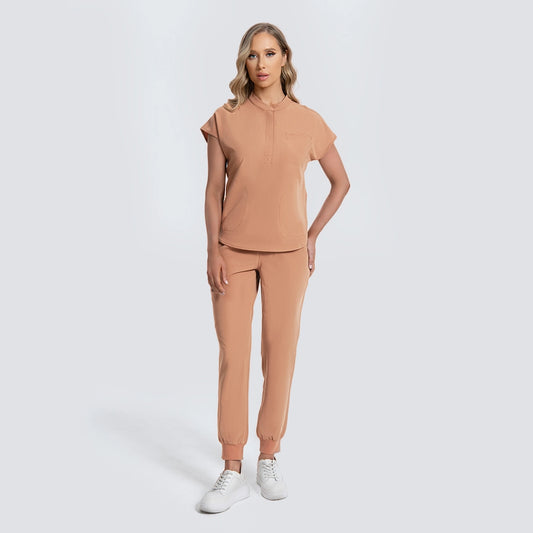
Slim-fit scrubs follow the body more closely and usually create a sharper, more contemporary silhouette. Tops may include curved seams, darts or narrower sleeves, while pants are often tapered from the thigh toward the ankle.
This style can look particularly polished in clinics, dental offices, reception areas and other patient-facing environments. The reduced amount of excess fabric also helps create a neat appearance when a scrub top is worn untucked.

Slim fit does not mean skin-tight. Properly fitted slim scrubs should skim the body rather than cling to it. You should still be able to raise your arms, sit, bend and take a full stride without feeling the fabric pull.
Warning signs of an overly tight fit include horizontal lines across the chest or thighs, pockets that remain open, a neckline that pulls away from the body and seams that feel stressed during movement. If these issues appear, try another size or a less fitted cut.
The best slim-fit scrubs combine a streamlined shape with enough stretch and carefully placed ease in high-movement areas.
Which Fit Provides Better Mobility?
Relaxed-fit scrubs naturally offer more physical space, but that does not always make them more mobile. Too much loose fabric can catch on drawer handles, bunch behind the knees or shift when items are carried in the pockets.
Slim-fit scrubs reduce excess material, although their mobility depends heavily on the fabric and construction. A narrow cut made from stiff material may feel restrictive. The same silhouette made with four-way-stretch fabric and a gusseted crotch can move comfortably through a wide range of positions.

To test either fit, perform movements that reflect your work:
- Raise both arms above your head.
- Reach across the body.
- Sit and stand several times.
- Squat or kneel.
- Take a long step forward.
- Place normal work items in the pockets.
The scrub top should not rise excessively, the waistband should stay secure and the fabric should not pull sharply across the back, hips or knees.
How Fabric Changes the Fit
The same cut can feel very different depending on the fabric.
A relaxed scrub made from lightweight material may have a soft, fluid drape. A heavier fabric can make the same design appear wider and more structured. Slim-fit scrubs often benefit from stretch because the fabric needs to follow the body without limiting movement.
Fabric recovery is equally important. After bending or sitting, the material should return to its original shape. If it remains stretched around the elbows, knees or seat, both relaxed and slim scrubs can begin to look tired during the shift.
A smooth, matte finish generally gives either fit a more refined appearance. Thin or shiny fabric may emphasize every fold in a slim cut, while stiff material can make relaxed scrubs look bulky.
Breathability, moisture management and ease of care should also be considered. A flattering uniform will not feel successful if it becomes uncomfortable after several busy hours.
Choosing According to Body Proportions
The best fit is the one that balances your proportions rather than hiding or exaggerating them.
Relaxed-fit scrubs may suit wearers with broader shoulders, fuller hips or muscular thighs because they provide more space in these areas. They can also feel comfortable for anyone who prefers less fabric contact with the body.
Slim-fit scrubs can create definition on smaller or straighter frames and prevent the uniform from looking overwhelming. They may also work well for taller wearers who prefer a long, streamlined line.
These are only general observations, not fixed rules. Someone with a fuller build may prefer a well-constructed slim fit, while a petite wearer may enjoy the ease of a relaxed silhouette. Shoulder width, rise, torso length and inseam can matter more than body shape alone.
Whenever possible, compare the garment measurements with a scrub set that already fits well. Do not rely only on the size printed on the label.

Which Fit Looks More Professional?
Both fits can look professional when worn in the correct size.
Slim-fit scrubs often create an immediately tailored appearance because they reduce excess fabric. However, a cut that is too close to the body can look less appropriate and may restrict movement.
Relaxed-fit scrubs create a classic professional look when the shoulders, sleeves and length are properly proportioned. They begin to look untidy only when the garment is significantly oversized, heavily wrinkled or too long.
Color also influences the final effect. Navy, black, pewter and dark green can make a relaxed silhouette appear more structured. Lighter colors may make the details of a slim cut more visible.
Clean shoes, an appropriate pant length and a coordinated top and bottom usually have a greater effect on professionalism than choosing one fit over the other.
Match the Fit to Your Work Environment
Consider what a typical shift actually requires.
A relaxed fit may be useful if you:
- Perform frequent lifting, bending or floor-level tasks.
- Prefer extra room through the torso, hips or thighs.
- Regularly wear layers under your scrubs.
- Work long shifts and dislike close-fitting clothing.
- Prefer a traditional uniform silhouette.
A slim fit may be useful if you:
- Prefer a clean, contemporary appearance.
- Want less fabric moving around the body.
- Work in a clinic, dental practice or other patient-facing setting.
- Prefer tapered pants and shaped tops.
- Have found traditional unisex scrubs excessively wide.
Some professionals prefer to combine fits. A slim-fit top can be paired with relaxed or straight-leg pants, while a relaxed top can work with tapered pants. Mixing silhouettes can provide comfort where it is most needed while keeping the overall outfit balanced.
Common Fit Mistakes
One common mistake is choosing relaxed scrubs several sizes too large in the belief that more room always creates more comfort. Oversized shoulders, low armholes and an excessively long rise can actually make movement more difficult.
Another mistake is selecting slim-fit scrubs based only on appearance. If the uniform feels restrictive when sitting or reaching, it is unlikely to become more comfortable during a long shift.
Do not judge scrub pants without testing the pockets. A waistband that fits well when the pockets are empty may slide once a phone and other items are added.
Finally, check the garment after washing. Some fabrics shrink slightly, while others soften and relax. Following the care instructions helps preserve the intended fit.
How to Make the Final Choice
Start with your usual measurements and consult the specific brand’s size chart. Then consider where you want more room and where you prefer a closer shape.
When trying on relaxed-fit scrubs, check that the shoulders and waist still look intentional. When trying slim-fit scrubs, check that the seams remain smooth and the pockets lie flat.
Move through several work-related positions and wear the shoes you normally use during a shift. If possible, test one set through a full workday before purchasing additional colors.
The right fit should feel secure without requiring constant adjustment. It should allow movement without excessive fabric and maintain a professional shape throughout the day.
The Best Fit Is the One You Can Work In
Relaxed-fit and slim-fit scrubs each offer clear advantages. Relaxed styles provide extra ease, comfortable layering and a traditional silhouette. Slim styles reduce bulk and create a more tailored, modern appearance.
The decision should not be based only on trends. A great scrub fit supports the way you move, suits your proportions and helps you feel comfortable and confident throughout the shift.
When the fabric, size and construction are right, both relaxed and slim scrubs can provide the balance of function and professionalism that healthcare work demands.